
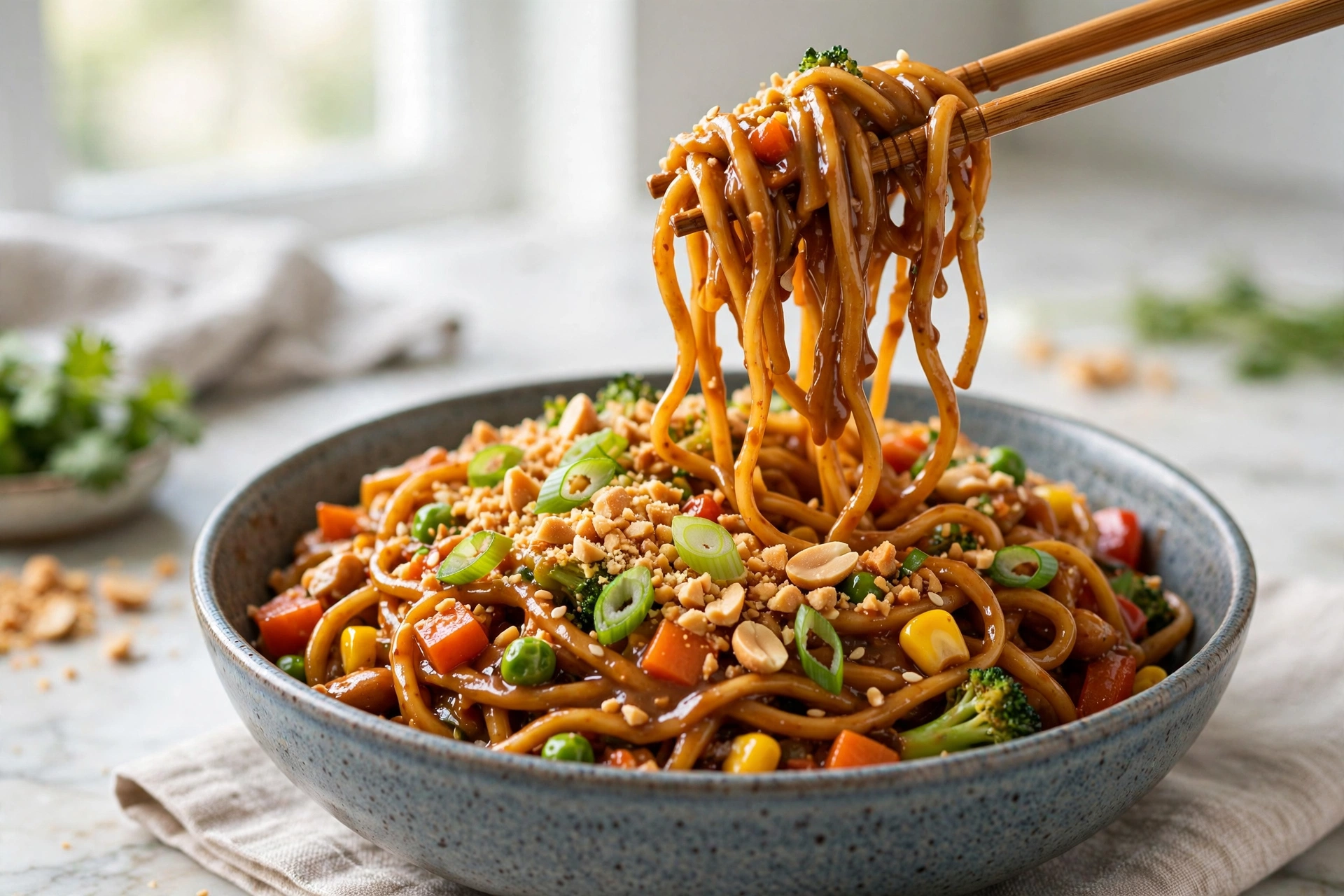
A peanut butter noodle stir fry is the weeknight dinner I make when the fridge is nearly empty and nobody wants to go to the store. Here’s the beautiful part: with a bag of frozen stir-fry vegetables, there’s literally zero chopping. The peanut sauce whisks together in the time it takes the noodles to boil, the vegetables go straight from freezer to screaming-hot pan, and dinner is on the table in 15 minutes flat.
I used to be skeptical of frozen vegetables in a stir-fry — wouldn’t they go soggy? Turns out the trick is high heat and no thawing. Frozen vegetables hit a ripping-hot pan, the surface moisture flash-evaporates, and you get lightly charred, still-crisp vegetables instead of a steamy pile. Combined with chewy noodles and a peanut sauce that’s salty, tangy, a little sweet, and as spicy as you want it to be, this tastes like takeout that happens to cost about two dollars a serving.
This is also one of the most forgiving recipes I know. Any noodle, any frozen vegetable blend, any peanut butter — it all works. Once you learn the sauce ratio, you’ll be making it from memory within a month.
Why You’ll Love This Recipe
- 15 minutes, zero chopping. Frozen vegetables mean no knife work at all. This is genuinely the fastest real dinner I know how to make.
- Pantry-staple sauce. Peanut butter, soy sauce, vinegar, and something sweet — you probably own all of it right now.
- Budget hero. A bag of frozen vegetables and half a box of spaghetti feeds four for just a few dollars.
- Kid-approved. The creamy, mildly sweet sauce is a hit with picky eaters — put the sriracha on the table, not in the pan.
- Endlessly adaptable. Swap the vegetables, the noodles, the nut butter, the protein — the formula holds.
- One pan plus one pot. Minimal dishes, which on a weeknight might be the best feature of all.
Ingredients
- 8 oz noodles — Spaghetti, linguine, lo mein, udon, or rice noodles all work. Use what you have; the sauce doesn’t discriminate. For gluten-free, use rice noodles and tamari.
- 1 bag (16 oz) frozen stir-fry vegetable blend — The classic blend (broccoli, snap peas, carrots, water chestnuts, baby corn) is perfect. Broccoli florets, stir-fry medley, or even frozen pepper-and-onion blend all work. Do not thaw — cook from frozen.
- 1 tbsp neutral oil (avocado or vegetable) — For the hot pan. You need an oil with a high smoke point here.
- 1/3 cup creamy peanut butter — Natural or regular both work (see my notes below on the difference). Crunchy is fine too if you like texture.
- 3 tbsp soy sauce (or tamari) — The salty backbone of the sauce.
- 2 tbsp rice vinegar — Brightens the rich peanut butter so the sauce tastes lively, not heavy.
- 1 tbsp toasted sesame oil — Adds unmistakable nutty depth. Don’t substitute plain sesame oil.
- 1 tbsp maple syrup or honey — Balances the salt and acid. Maple keeps it vegan.
- 1–2 tbsp sriracha or chili garlic sauce — Start with 1 tablespoon for gentle heat; the sauce should tingle, not burn.
- 1 tsp garlic powder — Easier than fresh garlic here and distributes evenly through the sauce.
- 1/2 tsp ground ginger — Warm background note. Fresh grated ginger (1 teaspoon) is even better if you have it.
- 1/2–3/4 cup hot water (plus reserved noodle water) — For thinning the sauce to silky consistency.
For serving:
- 3 scallions, thinly sliced
- 1/4 cup crushed roasted peanuts
- Lime wedges — A squeeze of fresh lime at the table wakes everything up.
- Extra sriracha and sesame seeds
Instructions
-
Boil the noodles. Bring a large pot of well-salted water to a boil and cook the noodles until just shy of al dente — about 1 minute less than the package says. They’ll finish cooking in the hot pan. Before draining, reserve 1 cup of the starchy noodle water. Drain and set aside.
-
Whisk the peanut sauce. While the noodles cook, whisk together the peanut butter, soy sauce, rice vinegar, sesame oil, maple syrup, sriracha, garlic powder, and ginger in a bowl. It will look thick and pasty — that’s correct. Whisk in 1/2 cup hot water until smooth and pourable, about the consistency of heavy cream. Taste it: it should be boldly salty, tangy, and a little sweet. Remember the noodles and vegetables are unseasoned, so the sauce needs to carry the whole dish.
-
Sear the frozen vegetables. Heat the oil in your largest skillet or wok over high heat until it shimmers and just starts to smoke. Add the frozen vegetables straight from the bag — don’t thaw, don’t crowd if you can help it — and spread them in a single layer. Let them sit undisturbed for 2–3 minutes so they char in spots, then toss and cook 3–4 minutes more until heated through and crisp-tender. The high heat evaporates the surface ice before it can steam the vegetables soggy.
-
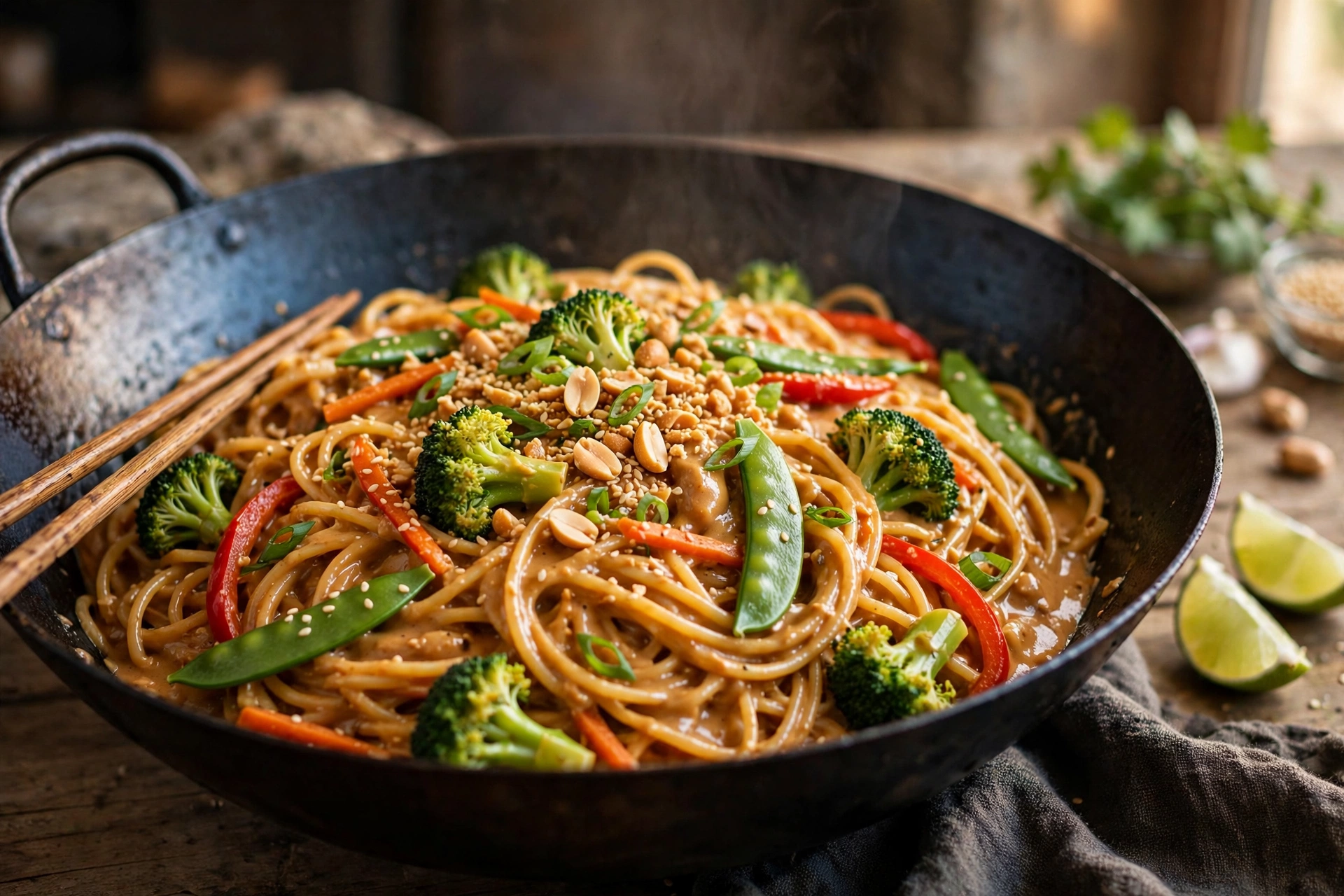
Combine everything. Add the drained noodles to the pan with the vegetables. Pour over the peanut sauce and toss vigorously with tongs for 1–2 minutes over medium-high heat. The sauce will thicken as it hits the hot pan — loosen it with splashes of the reserved noodle water until every strand is glossy and coated. The starch in the noodle water helps the sauce cling instead of pooling.
-
Serve immediately. Divide among bowls and top with sliced scallions, crushed peanuts, sesame seeds, and a lime wedge. Pass extra sriracha at the table. Eat it hot — peanut sauce firms up as it cools.
Pro Tips
- Cook frozen vegetables from frozen — never thawed. Thawed frozen vegetables release their water all at once and steam instead of sear. Straight from the freezer into a screaming-hot pan is the entire secret to crisp-tender results.
- High heat is non-negotiable. A timid medium flame is how you get soggy stir-fry. You want the oil shimmering, the pan nearly smoking, and the vegetables sizzling aggressively on contact.
- Natural vs. regular peanut butter: Natural peanut butter (just peanuts and salt) makes a slightly looser, more intensely peanutty sauce but can separate — whisk it well. Regular peanut butter (like Jif or Skippy) has emulsifiers that make an ultra-smooth, stable sauce. Both are delicious; use what you have.
- Undercook the noodles slightly. They absorb sauce and finish cooking in the hot pan. Fully cooked noodles turn mushy by the time everything comes together.
- Sauce too thick? Noodle water. Too thin? Simmer 30 seconds. The reserved starchy noodle water is better than plain water for thinning — the starch helps the sauce grip the noodles. If you overshoot and it’s watery, an extra 30 seconds over heat tightens it right up.
- Taste the sauce before it meets the noodles. Once tossed, you can’t fix seasoning easily. The sauce should taste slightly too bold on its own — the plain noodles and vegetables will dilute it to perfect.
Variations
- Add protein: Toss in crispy baked tofu cubes, shelled edamame (add them frozen with the veg), shredded rotisserie chicken, or shrimp (add raw shrimp with the vegetables; they cook in 3–4 minutes).
- Almond or sunflower butter: For a peanut allergy, almond butter swaps 1:1. Sunflower seed butter works too, though it can turn the sauce slightly green (harmless, just surprising).
- Extra vegetable power: Add a couple of handfuls of fresh spinach or shredded cabbage at the end — they’ll wilt into the hot noodles in a minute.
- Spice it up: Add a teaspoon of chili crisp, sliced fresh chiles, or a drizzle of chili oil at the table for the heat lovers.
- Gluten-free: Rice noodles + tamari instead of soy sauce. Everything else is naturally gluten-free — just check your sriracha label.
- Lo mein upgrade: If you have fresh lo mein noodles from the refrigerated section, they cook in 3 minutes and have the chewiest texture of all.
Storage
Store leftovers in an airtight container in the refrigerator for 3–4 days. The noodles will absorb the sauce overnight and the sauce will thicken — this is normal. Reheat in a skillet over medium heat with a splash of water, tossing until glossy again, or microwave in 60-second bursts, stirring and adding water between each. The vegetables lose a little of their sear on reheating but the flavor holds up well. I don’t recommend freezing the finished dish — the noodles go mushy and the sauce can separate. The peanut sauce on its own, however, freezes beautifully for up to 3 months; thaw and whisk with warm water to revive.
FAQs
Which peanut butter is best for the sauce?
Honestly, whatever’s in your pantry. Creamy natural peanut butter gives the most intense peanut flavor; conventional creamy (Jif/Skippy style) gives the silkiest texture thanks to its emulsifiers. Avoid the “honey roasted” or flavored varieties — they throw off the balance. Crunchy peanut butter works if you enjoy the texture.
Can I use fresh vegetables instead of frozen?
Of course — slice them thin and stir-fry 4–6 minutes until crisp-tender. But don’t dismiss frozen: it’s pre-cut, always in season, nutritionally equivalent, and the whole point of this 15-minute recipe is skipping the chopping.
My sauce is too thick / too thin. How do I fix it?
Too thick: whisk in hot water or reserved noodle water a tablespoon at a time. Too thin: let it simmer in the hot pan for 30–60 seconds, tossing — the starch tightens it. The target is heavy-cream consistency that coats a spoon.
How do I make it spicier (or milder)?
The recipe as written is mild-medium. For mild/kid-friendly, leave the sriracha out of the sauce entirely and serve it on the side. For real heat, double the sriracha and finish with chili crisp or sliced Thai chiles.
Is this recipe vegan?
Yes, as written with maple syrup. If you use honey instead of maple, it’s vegetarian. Double-check that your noodles contain no egg if that matters to you — most dried spaghetti and rice noodles are vegan.
Can I double this recipe?
Yes, but stir-fry the vegetables in two batches — crowding the pan is the enemy of char. The sauce doubles perfectly; just whisk it in a bigger bowl. Everything else scales linearly.
15-Minute Peanut Butter Noodle Stir-Fry with Frozen Vegetables
Prep Time: 5 minutes | Cook Time: 10 minutes | Total Time: 15 minutes | Servings: 4
Ingredients:
- 8 oz noodles (spaghetti, lo mein, udon, or rice noodles)
- 1 bag (16 oz) frozen stir-fry vegetable blend, unthawed
- 1 tbsp neutral oil
- 1/3 cup creamy peanut butter
- 3 tbsp soy sauce
- 2 tbsp rice vinegar
- 1 tbsp toasted sesame oil
- 1 tbsp maple syrup
- 1–2 tbsp sriracha
- 1 tsp garlic powder
- 1/2 tsp ground ginger
- 1/2–3/4 cup hot water, plus 1 cup reserved noodle water
- 3 scallions, sliced; 1/4 cup crushed peanuts; lime wedges, to serve
Instructions:
- Boil noodles in salted water until just shy of al dente; reserve 1 cup noodle water and drain.
- Whisk peanut butter, soy sauce, rice vinegar, sesame oil, maple syrup, sriracha, garlic powder, and ginger; thin with 1/2 cup hot water to heavy-cream consistency.
- Sear frozen vegetables in shimmering oil over high heat, undisturbed 2–3 minutes, then tossed 3–4 minutes more until charred and crisp-tender.
- Add noodles and sauce to the pan; toss 1–2 minutes over medium-high heat, loosening with noodle water until glossy.
- Serve immediately topped with scallions, peanuts, sesame seeds, and lime wedges.
If this 15-minute formula saved your weeknight, there’s more where it came from: my Teriyaki Chicken Rice Bowls run on the same fast-pan logic with a sweet-savory glaze, and One-Pan Creamy Tuscan Chicken is the 30-minute skillet dinner to try next. Peanut lovers should also bookmark my No-Bake Peanut Butter Pie — same obsession, dessert form.
15-Minute Peanut Butter Noodle Stir-Fry with Frozen Vegetables
Ingredients
Method
- Boil noodles in salted water until just shy of al dente; reserve 1 cup noodle water and drain.
- Whisk peanut butter, soy sauce, rice vinegar, sesame oil, maple syrup, sriracha, garlic powder, and ginger; thin with 1/2 cup hot water to heavy-cream consistency.
- Sear frozen vegetables in shimmering oil over high heat, undisturbed 2–3 minutes, then tossed 3–4 minutes more until charred and crisp-tender.
- Add noodles and sauce to the pan; toss 1–2 minutes over medium-high heat, loosening with noodle water until glossy.
- Serve immediately topped with scallions, peanuts, sesame seeds, and lime wedges.