
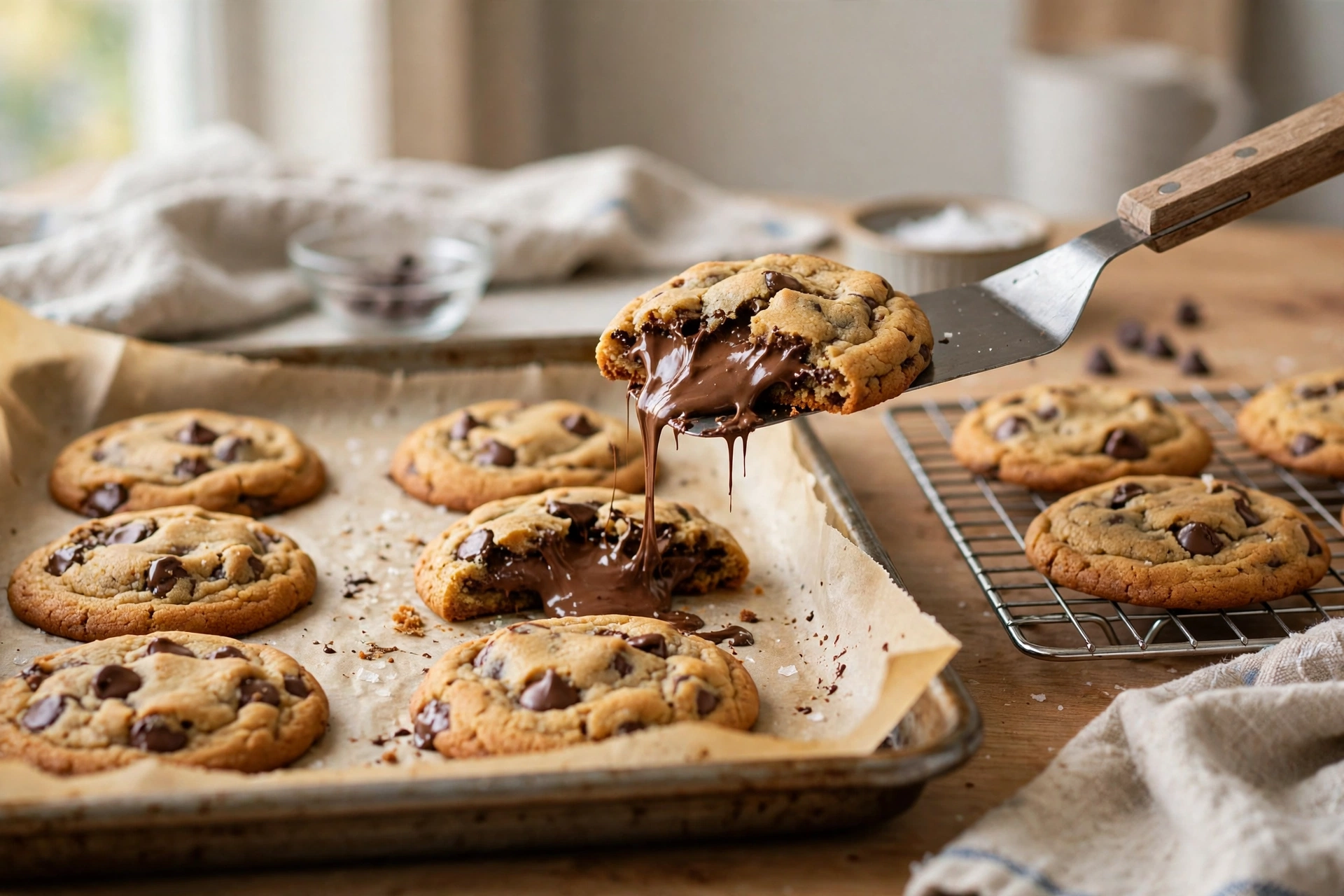
There’s a very specific sound a great cookie makes. The edges crackle a little when you press them. The center gives, just barely, and a ribbon of chocolate stretches when you pull the two halves apart. I chased that cookie for the better part of a year, through batches that spread into lace, batches that puffed up like cake, and one memorable batch I forgot to sugar. (Don’t do that.)
This is the recipe that ended the chase. It’s built on brown butter, a higher ratio of brown sugar to white, and one honest hour of patience while the dough rests. The result is a thick cookie with crisp, rippled edges, a soft and chewy middle, and puddles of chocolate in every bite instead of polite little chips. If you’ve ever eaten a bakery cookie and wondered why yours at home never quite get there, this page holds the answer.
Quick facts: Prep time 20 minutes, plus 1 hour chilling. Bake time 11 minutes per batch. Total time about 1 hour 45 minutes. Yield: 24 cookies. Difficulty: easy, one bowl plus a saucepan.
Why This Recipe Works
Three small decisions do almost all of the heavy lifting here.
Brown butter. Melting the butter and letting it toast until the milk solids turn amber adds a deep, nutty, almost toffee-like flavor that plain melted butter can’t touch. It takes five extra minutes and it changes everything.
More brown sugar than white. Brown sugar holds moisture, and moisture is what keeps the center chewy on day two. White sugar still shows up for crisp edges, but it plays a supporting role.
A real chill. Warm dough spreads. Cold dough holds its shape, the flour hydrates, and the flavor deepens into something that tastes like the dough rested overnight at a good bakery. One hour is the minimum. Overnight is better. Past 72 hours, freeze the scooped dough instead.
Ingredients You’ll Need
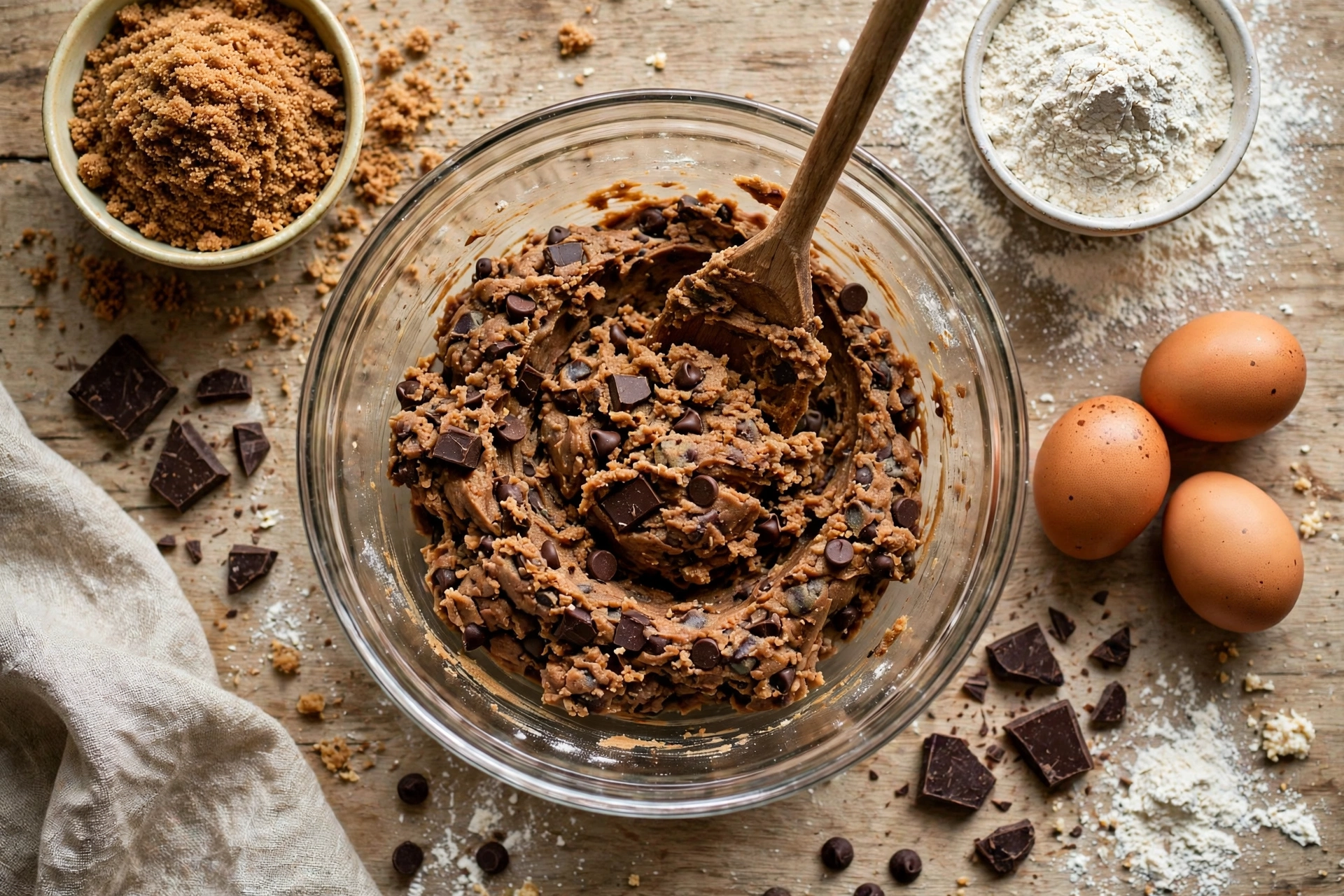
- 1 cup (226 g) unsalted butter, browned and slightly cooled
- 1 cup (200 g) dark brown sugar, packed
- 1/2 cup (100 g) granulated sugar
- 2 large eggs, at room temperature
- 2 teaspoons vanilla extract
- 2 1/4 cups (280 g) all-purpose flour, spooned and leveled
- 2 teaspoons cornstarch, the quiet secret to a tender center
- 1 teaspoon baking soda
- 1 teaspoon fine sea salt, plus flaky salt for sprinkling
- 1 1/2 cups (255 g) semisweet chocolate chips
- 4 ounces (115 g) dark chocolate bar, chopped into rough chunks
A note on the chocolate: chips hold their shape, chopped bar chocolate melts into puddles. Using both gives you the best texture in a single bite. If you only have chips, use 2 full cups and carry on. Nobody will complain.
How to Make Chocolate Chip Cookies
- Brown the butter. Melt the butter in a light-colored saucepan over medium heat. Swirl the pan often. It will foam, crackle, then go quiet, and the bits on the bottom will turn amber and smell like toasted hazelnuts. That’s your cue, usually 5 to 7 minutes in. Pour it into a heatproof bowl, scraping in every brown bit, and let it cool for 10 minutes.
- Whisk the sugars. Add both sugars to the warm butter and whisk for a full minute, until the mixture looks glossy. Whisk in the eggs one at a time, then the vanilla, until smooth and slightly thickened.
- Add the dry ingredients. Sprinkle the flour, cornstarch, baking soda, and fine salt over the top. Fold with a spatula until the last streaks of flour almost disappear. Stop early rather than late; overmixing builds gluten, and gluten builds tough cookies.
- Fold in the chocolate. Add the chips and chopped chocolate and fold until evenly scattered. The dough will be soft and a little shiny. That’s normal.
- Chill. Cover the bowl and refrigerate for at least 1 hour and up to 72 hours. Cold dough is non-negotiable here.
- Heat the oven. When you’re ready to bake, set the oven to 350°F (175°C) and line two baking sheets with parchment paper.
- Scoop. Scoop the dough into balls of about 3 tablespoons each (roughly 55 g if you own a scale). Roll them briefly, then tear each ball in half and press the halves back together with the torn, craggy side facing up. That rough top bakes into the rippled bakery look.
- Bake 10 to 12 minutes. Space the balls 2 inches apart and bake until the edges are golden and set but the centers still look slightly underdone and puffy. They will finish cooking on the hot pan.
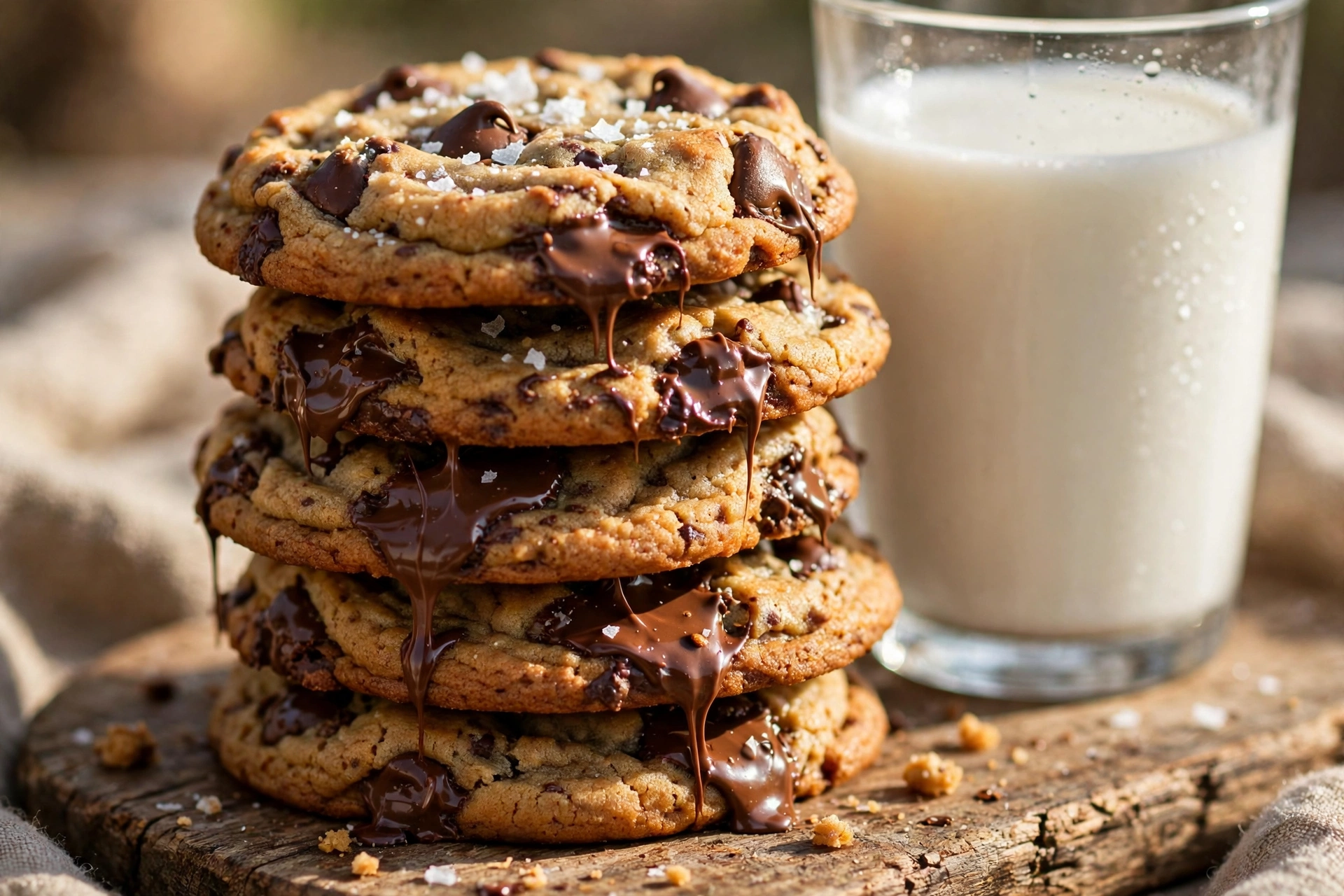
- Finish like a bakery. Right out of the oven, sprinkle each cookie with a pinch of flaky salt. Leave them on the pan for 10 minutes, then move them to a rack. Warm, with milk, is strongly encouraged.
Tips for Thick, Chewy Cookies Every Time
Weigh the flour if you can. A cup of flour scooped straight from the bag can hold 20 percent more than a cup that’s spooned and leveled, and that difference alone explains most dry, cakey cookies.
Room temperature eggs matter. Cold eggs can seize warm brown butter into little flecks. If you forgot to set them out, put the whole eggs in a bowl of warm water for 10 minutes.
Pull them early. The centers should look a touch raw when the timer goes off. Carryover heat does the rest. If they look fully done in the oven, they’ll be hard by the time they cool.
Underbake one test cookie. Ovens lie. Bake a single cookie first, check the spread and the center, and adjust the rest of the batch by a minute either way.
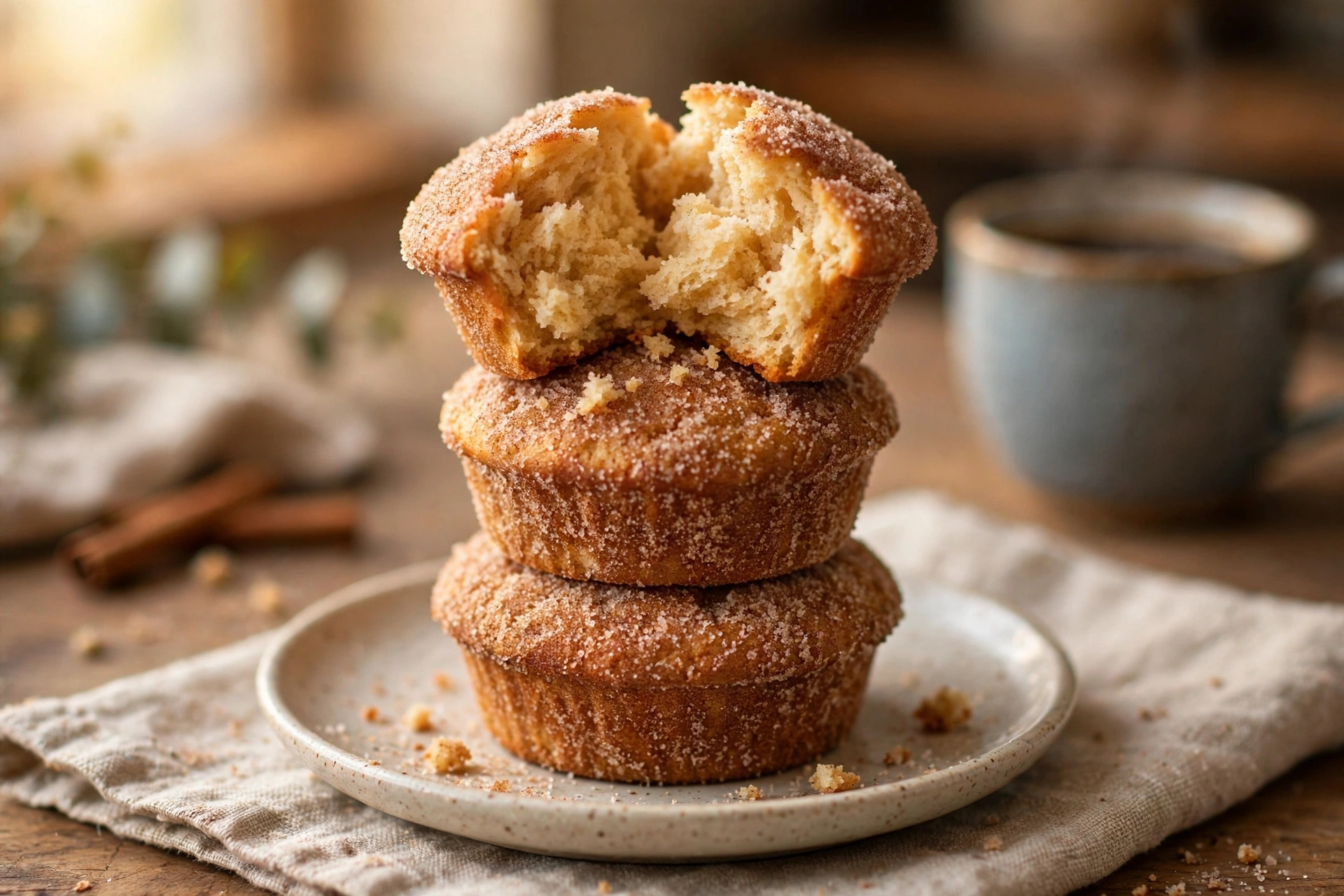
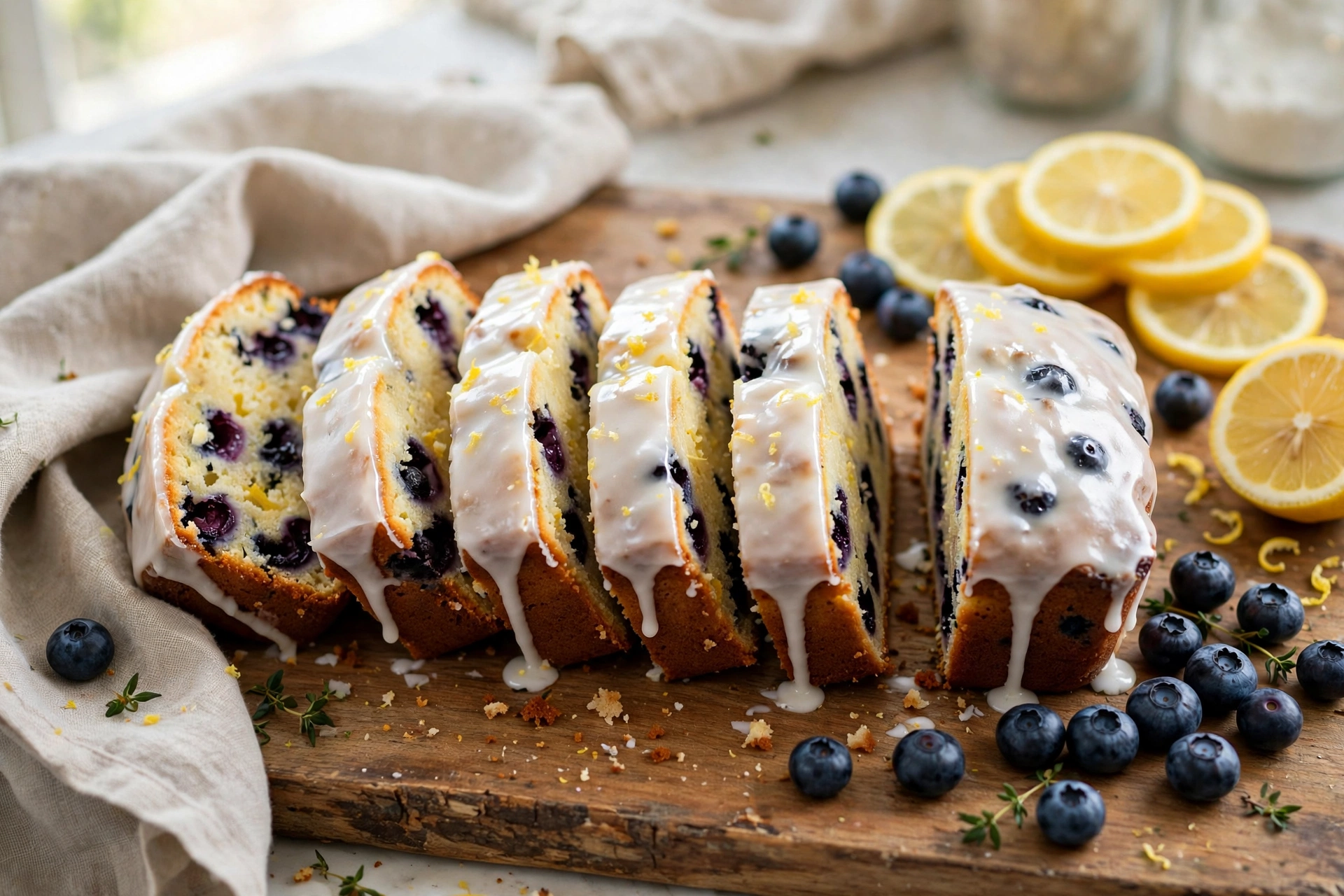
Love a good bake-day project? Our cinnamon sugar donut muffins and this moist lemon blueberry loaf use the same brown sugar logic and disappear just as fast.
How the Dough Changes as It Rests
If you bake one tray right after mixing and another the next morning, you’ll taste exactly what the chill is doing. Fresh dough spreads wide and bakes up thin, with a one-note sweetness. After a few hours in the fridge, the flour has soaked up the moisture from the eggs and butter, so the cookies hold a thicker shape and chew instead of snap. By the next day, something else has happened: the sugars and browned butter have had time to get acquainted, and the flavor turns deeper, closer to toffee and butterscotch than to plain vanilla dough. This is the same trick good bakeries use when they age their dough for 24 to 48 hours. You’re not being fussy by waiting. You’re borrowing their best move for free.
The cold dough also bakes more evenly. A warm scoop hits the hot pan and the edges race ahead, lacy and crisp while the middle lags behind. A cold scoop melts at a steadier pace, so the rim crisps at the same moment the center sets. If your cookies have ever come out with dark edges and a raw middle, temperature, not the recipe, was probably the problem.
Variations Worth Trying
Brown sugar only. Drop the granulated sugar and use 1 1/2 cups of brown sugar for an even chewier, molasses-rich cookie. The edges will be softer, so give them the full 10 minutes on the pan before moving them.
Double chocolate. Replace 1/4 cup of the flour with unsweetened cocoa powder and keep the chips where they are. The result tastes like the corner piece of a good brownie, in cookie form.
Toasted pecan. Fold in 3/4 cup of chopped toasted pecans with the chocolate. Toast them at 350°F (175°C) for 6 to 8 minutes first; raw nuts taste flat next to brown butter.
Espresso edge. A teaspoon of instant espresso powder whisked into the flour deepens the chocolate flavor without making the cookies taste like coffee. People will ask what your secret is. You don’t have to tell them.
How to Store and Freeze
Baked cookies keep in an airtight container at room temperature for up to 4 days. A slice of sandwich bread tucked into the container keeps them soft; the cookies steal its moisture. Refresh day-old cookies in a 300°F (150°C) oven for 3 to 4 minutes and they taste newly baked.
To freeze, scoop the raw dough into balls, freeze them solid on a tray, then move them to a freezer bag for up to 3 months. Bake straight from frozen at 350°F (175°C), adding 1 to 2 minutes to the bake time. Warm cookies on demand, any night of the week. It’s a dangerous kind of convenience.
Frequently Asked Questions
Can I skip browning the butter?
Yes. Use the same amount of plain melted butter and the cookies will still be good. They just won’t have that toasted, toffee-like depth, so add an extra pinch of salt to compensate.
Why did my cookies spread flat?
Usually the dough went into the oven warm, the butter was still hot when the eggs went in, or the flour was under-measured. Chill the scooped dough for 20 minutes and try again; it fixes most cases.
Can I make these without a mixer?
That’s how this recipe is written. A whisk, a spatula, and one bowl for the dough. The saucepan for the butter is the only extra dish.
What about nuts or other mix-ins?
Swap up to 1 cup of the chocolate for chopped walnuts or pecans. Keep the total volume of mix-ins the same so the dough-to-chocolate ratio stays balanced.
Nutrition Estimate
Per cookie (based on 24 cookies): about 215 calories, 11 g fat, 29 g carbohydrates, 19 g sugar, 2 g protein, 135 mg sodium. These numbers come from a standard nutrition calculator and will shift with the exact chocolate and butter you use.
Bake a batch this weekend. Then hide four of them somewhere sensible, because the first dozen will not survive the evening.
Best Chocolate Chip Cookies
Ingredients
Equipment
Method
- Brown the butter. Melt the butter in a light-colored saucepan over medium heat. Swirl the pan often. It will foam, crackle, then go quiet, and the bits on the bottom will turn amber and smell like toasted hazelnuts. That's your cue, usually 5 to 7 minutes in. Pour it into a heatproof bowl, scraping in every brown bit, and let it cool for 10 minutes.
- Whisk the sugars. Add both sugars to the warm butter and whisk for a full minute, until the mixture looks glossy. Whisk in the eggs one at a time, then the vanilla, until smooth and slightly thickened.
- Add the dry ingredients. Sprinkle the flour, cornstarch, baking soda, and fine salt over the top. Fold with a spatula until the last streaks of flour almost disappear. Stop early rather than late; overmixing builds gluten, and gluten builds tough cookies.
- Fold in the chocolate. Add the chips and chopped chocolate and fold until evenly scattered. The dough will be soft and a little shiny. That's normal.
- Chill. Cover the bowl and refrigerate for at least 1 hour and up to 72 hours. Cold dough is non-negotiable here.
- Heat the oven. When you're ready to bake, set the oven to 350°F (175°C) and line two baking sheets with parchment paper.
- Scoop. Scoop the dough into balls of about 3 tablespoons each (roughly 55 g if you own a scale). Roll them briefly, then tear each ball in half and press the halves back together with the torn, craggy side facing up. That rough top bakes into the rippled bakery look.
- Bake 10 to 12 minutes. Space the balls 2 inches apart and bake until the edges are golden and set but the centers still look slightly underdone and puffy. They will finish cooking on the hot pan.
- Finish like a bakery. Right out of the oven, sprinkle each cookie with a pinch of flaky salt. Leave them on the pan for 10 minutes, then move them to a rack. Warm, with milk, is strongly encouraged.