

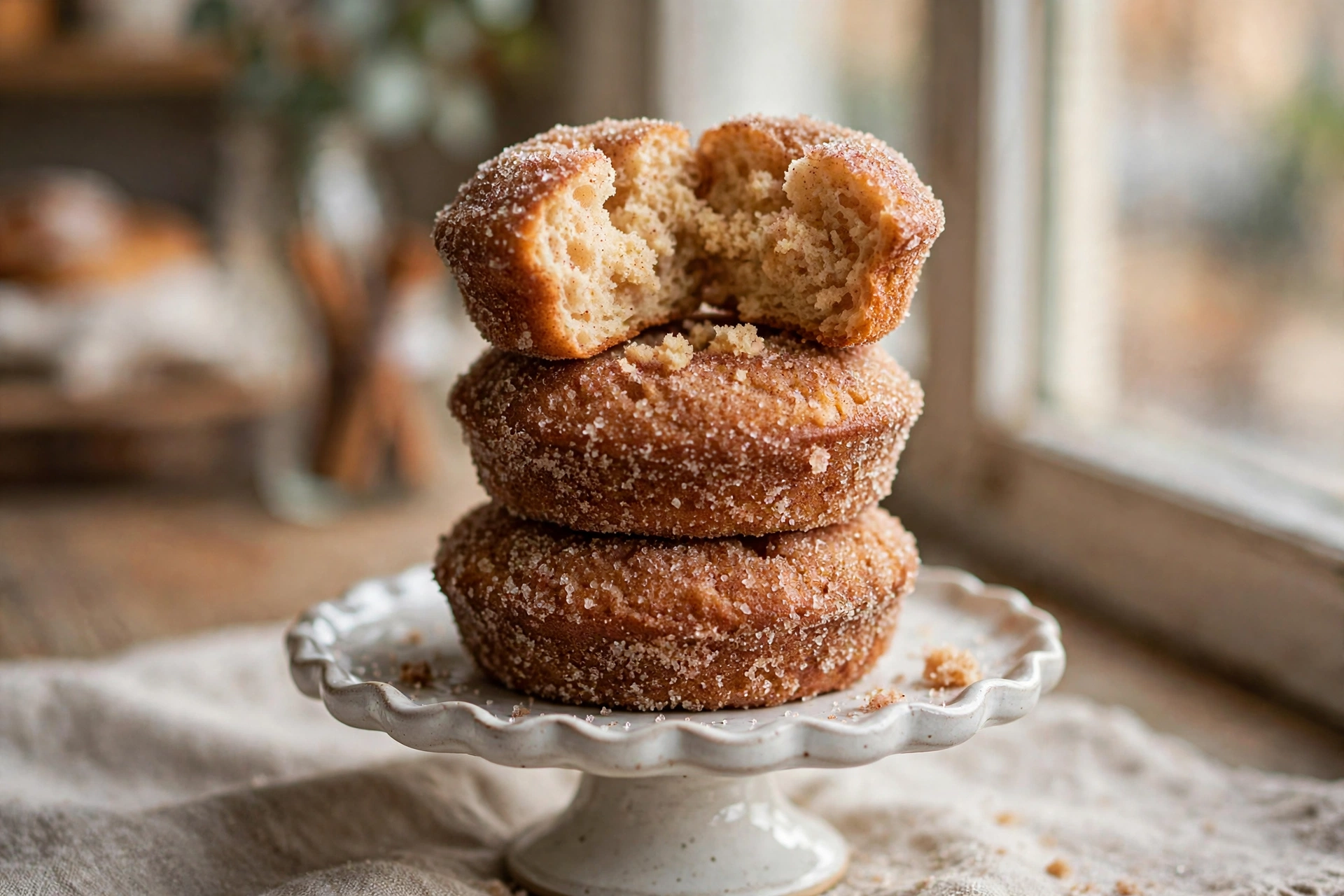
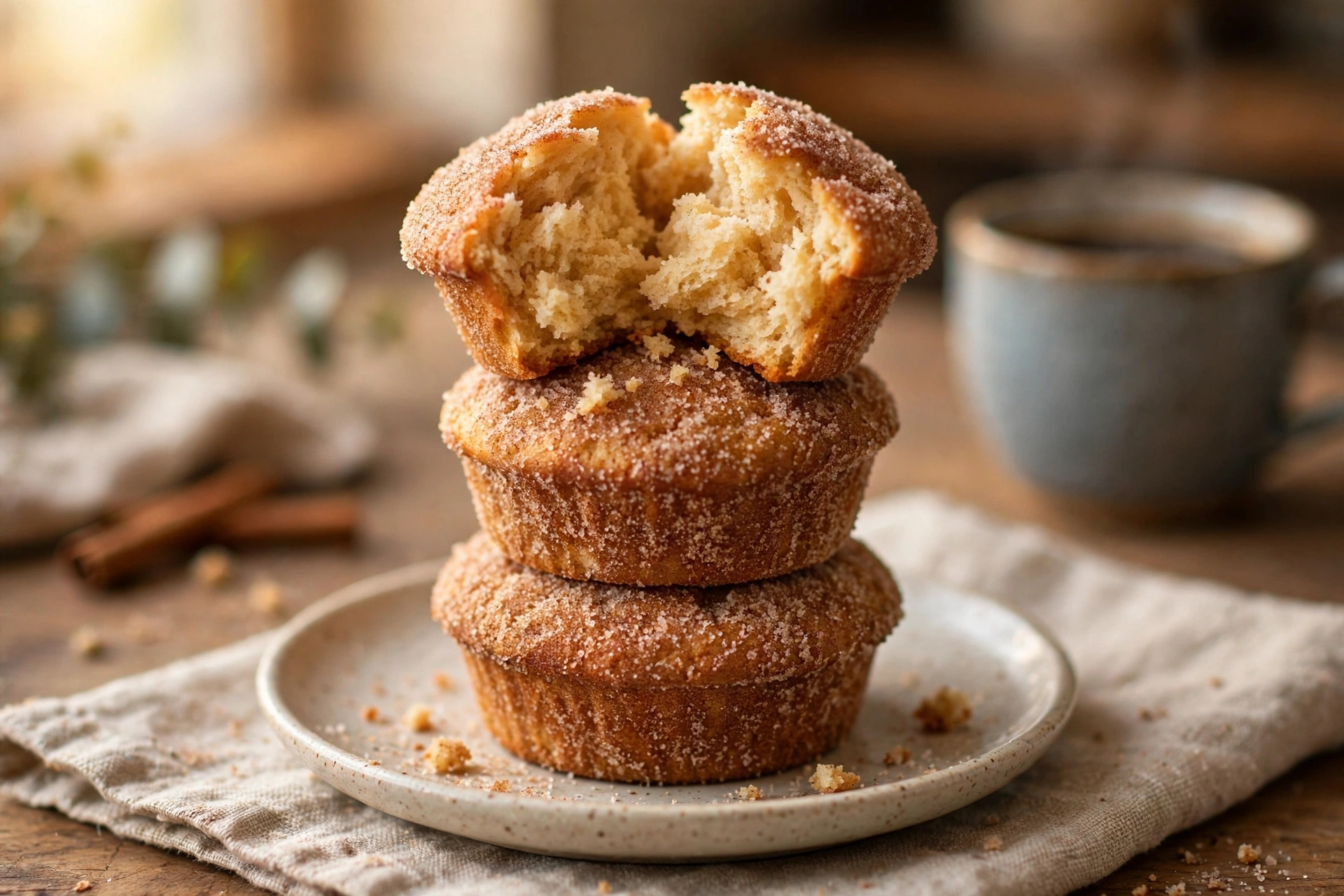
Somewhere between a tender vanilla muffin and a warm cinnamon donut, there’s a little treat sitting in the best seat in the house. These muffins bake up soft and golden, then, still warm, they get brushed with butter and rolled in cinnamon sugar until every bite has that crackly, sweet shell you expect from a fresh donut. No frying. No proofing. No special equipment hiding in a cupboard.
They’re weeknight-easy and weekend-special at once: one bowl of batter, twenty minutes in the oven, and a rolling station that kids and guests happily volunteer for. Coffee in hand strongly recommended.
Why They Taste Like Donuts, Not Muffins
- Nutmeg is the donut-shop secret. Just a hint, the flavor people associate with classic cake donuts, and it makes these taste unmistakably like the real thing.
- Melted butter keeps the crumb tender. No creaming step, no mixer, and the muffins stay moist for days.
- The coating goes on warm. Butter brushed over warm muffins glues the cinnamon sugar into an even, crackly shell that sets as they cool.
- Small size, real donut energy. A standard muffin tin, or a mini tin for two-bite versions, and they portion easily and bake evenly.
The Shopping List
For the muffins:
- 1 3/4 cups all-purpose flour
- 1 1/2 teaspoons baking powder
- 1/2 teaspoon fine salt
- 1/2 teaspoon ground cinnamon
- 1/4 teaspoon ground nutmeg
- 3/4 cup granulated sugar
- 1 large egg, at room temperature
- 3/4 cup whole milk
- 1/3 cup unsalted butter, melted and slightly cooled
- 1 1/2 teaspoons pure vanilla extract
For the cinnamon sugar coating:
- 1/2 cup granulated sugar
- 1 1/2 teaspoons ground cinnamon
- 4 tablespoons unsalted butter, melted
Baking, Then Rolling
- Oven on. Preheat to 350 degrees F. Grease a standard 12-cup muffin tin well, including the flat top surface, or use a mini muffin tin for 24 small muffins.
- Dry bowl. Whisk the flour, baking powder, salt, cinnamon, nutmeg, and sugar in a large bowl until evenly combined.
- Wet bowl. In a second bowl or a large measuring jug, whisk the egg, milk, melted butter, and vanilla until smooth.
- Combine, gently. Wet into dry, stirred with a spatula just until no streaks of flour remain, 10 to 12 strokes. Thick and a little lumpy is correct.
- Fill. Batter divided evenly among the cups, about two thirds full each. A cookie scoop keeps this tidy.
- Bake. Sixteen to 18 minutes for standard muffins, 10 to 12 for minis, until the tops spring back when pressed and a toothpick comes out clean.
- Brief cool. Five minutes in the tin, then out onto a rack. Warm, not hot, is the coating window.
- Roll. Sugar and cinnamon stirred together in a shallow bowl. Brush each muffin all over with melted butter, roll in the cinnamon sugar until fully coated, back on the rack for about 10 minutes so the shell sets.
Don’t Skip These
- Overmixing is the enemy. Muffin batter punishes enthusiasm. Stir only until the flour disappears or you’ll bake tunnels and a tough crumb.
- Warm, not hot, for coating. Straight from the oven the muffins are fragile and the butter soaks in instead of coating. Five to ten minutes of cooling gives you a shell that stays put.
- Brush, don’t dunk. Whole muffins dipped in butter go greasy and drown the crumb. A pastry brush lays down a thin, even layer.
- Roll twice for a bakery shell. Extra thick and crackly? Let the first layer set 2 minutes and roll again.
- Flour gets spooned and leveled. Packed flour is the main cause of dense, dry muffins.
Dress Them Differently
- Apple cider version. Swap the milk for reduced apple cider, simmer 1 1/2 cups down to 3/4 cup and cool it first, for a farmstand-style muffin.
- Filled centers. A teaspoon of jam or Nutella in the middle of each cup, midway through filling, before baking.
- Maple sugar coating. Half the coating sugar swapped for maple sugar, plus a pinch of flaky salt.
- Chocolate chip. Half a cup of mini chips folded into the batter, nutmeg skipped.
- Gluten-free. A one-to-one gluten-free flour blend with xanthan gum keeps the texture remarkably close.
Day Two, Day Three
Airtight container, room temperature, up to 3 days. The coating softens slightly by day two, but the flavor deepens, so it trades fair. A 10-second microwave warm-up or 5 minutes in a 300 degree F oven refreshes them nicely. They freeze well for up to 2 months, coated or uncoated; thaw at room temperature and warm briefly before serving. Freezing them uncoated has one advantage: butter and roll after thawing and the shell tastes freshly made.
Things People Wonder
Why nutmeg? Can it go?
Nutmeg is the signature background note in old-fashioned cake donuts. Leave it out and the muffins are still delicious, just slightly less donut-like. Don’t increase it, though. Too much turns bitter.
Mini muffin tin?
Yes, and they’re dangerously poppable. About 24 minis, 10 to 12 minutes in the oven, coated the same way.
My coating slid off. What happened?
Too hot, and the butter melted and ran. Or too cool, and the butter wouldn’t stick. Warm muffins, a thin brush of butter, an immediate roll. That fixes it.
Oil instead of butter in the batter?
A neutral oil swap gives a slightly softer crumb and works fine. But keep butter for the coating; its flavor is essential to the donut effect.
How do they stay moist the next day?
Airtight as soon as they’re fully cool. And keep them out of the fridge, which dries baked goods faster than the counter does.
The Donut Illusion, Explained
It surprises people that a muffin can taste like a donut, but the illusion rests on three specific choices. First, nutmeg: commercial cake donuts have carried a whisper of it for a century, and your palate reads it as “donut” before you consciously notice anything. Second, butter, in the batter and the coating both; its milk solids brown in the oven and deliver the rich, almost fried flavor that oil-based batters miss. Third, the warm sugar shell. A donut’s signature isn’t only flavor, it’s the faint crackle of a sugar coating against a soft crumb, and rolling these while warm recreates that contrast exactly. Serve them slightly warm when you can. Heat lifts the cinnamon and vanilla aromas, and the whole effect doubles. It’s also why leftovers deserve a brief warm-up instead of being eaten cold from the container.
Other Finishes Worth a Try
Cinnamon sugar is the classic, but the plain muffins are a willing base for other endings. Vanilla glaze: whisk 1 cup powdered sugar with 2 tablespoons milk and 1/2 teaspoon vanilla until pourable, dip the tops of cooled muffins, let the glaze set 15 minutes. Chocolate dip: melt 4 ounces chopped dark chocolate with 1 teaspoon coconut oil, dip the tops, and add sprinkles before it sets for a bakery-case look. Powdered sugar: the lightest finish, butter skipped entirely, a generous dusting through a sieve right before serving. Apple butter centers: fill baked, cooled muffins from the top with a piping tip of apple butter, then coat as usual, and the cinnamon sugar outside meets spiced apple inside in the best possible way.
Boxes, Bags, and Bake Sales
These travel and sell well because the coating protects the crumb from drying out. Pack them in a single layer in a bakery box or tin, parchment between layers if stacking is unavoidable. At a bake sale, the mini version is the money maker: two-bite size, priced for pocket change, easy for small hands. A little tag naming the nutmeg and cinnamon sells the story. Gifting? Four muffins in a clear bag tied with twine, plus a note to warm for ten seconds before eating, lands like something from a good bakery.
When Muffins Misbehave
- Barely rose. The baking powder is likely old; it loses strength after about six months open. Replace it, and make sure the oven was fully preheated before the tin went in.
- Tough crumb, full of tunnels. The batter got stirred too much. Count the strokes next time and stop the moment the flour vanishes.
- Dry muffins. Packed flour, or a few minutes too long in the oven. Spoon and level, and start checking at the early end of the range; the tops should spring back, not feel firm.
- Dramatic cracks on top. A slightly hot oven. An inexpensive oven thermometer settles the question, and dropping the temperature by 10 degrees usually solves it.
- Stuck to the tin. Grease generously, including the flat top, rest five minutes before turning out, and run a thin knife around stubborn edges.
Serving Them Right
Serve them warm if you possibly can, on a plate that isn’t fussy, with coffee or a glass of cold milk within reach. For brunch, split a warm muffin and add a smear of salted butter or a spoonful of jam; the cinnamon shell against something creamy is genuinely hard to beat. Baking for a crowd? Set up the rolling station and let guests coat their own. People remember the muffin they rolled themselves far longer than one that simply arrived finished on a plate.
By the Clock
Prep time: 15 minutes
Cook time: 18 minutes
Total time: 33 minutes
Servings: 12 muffins
Cuisine: American
Course: Dessert, snack, brunch
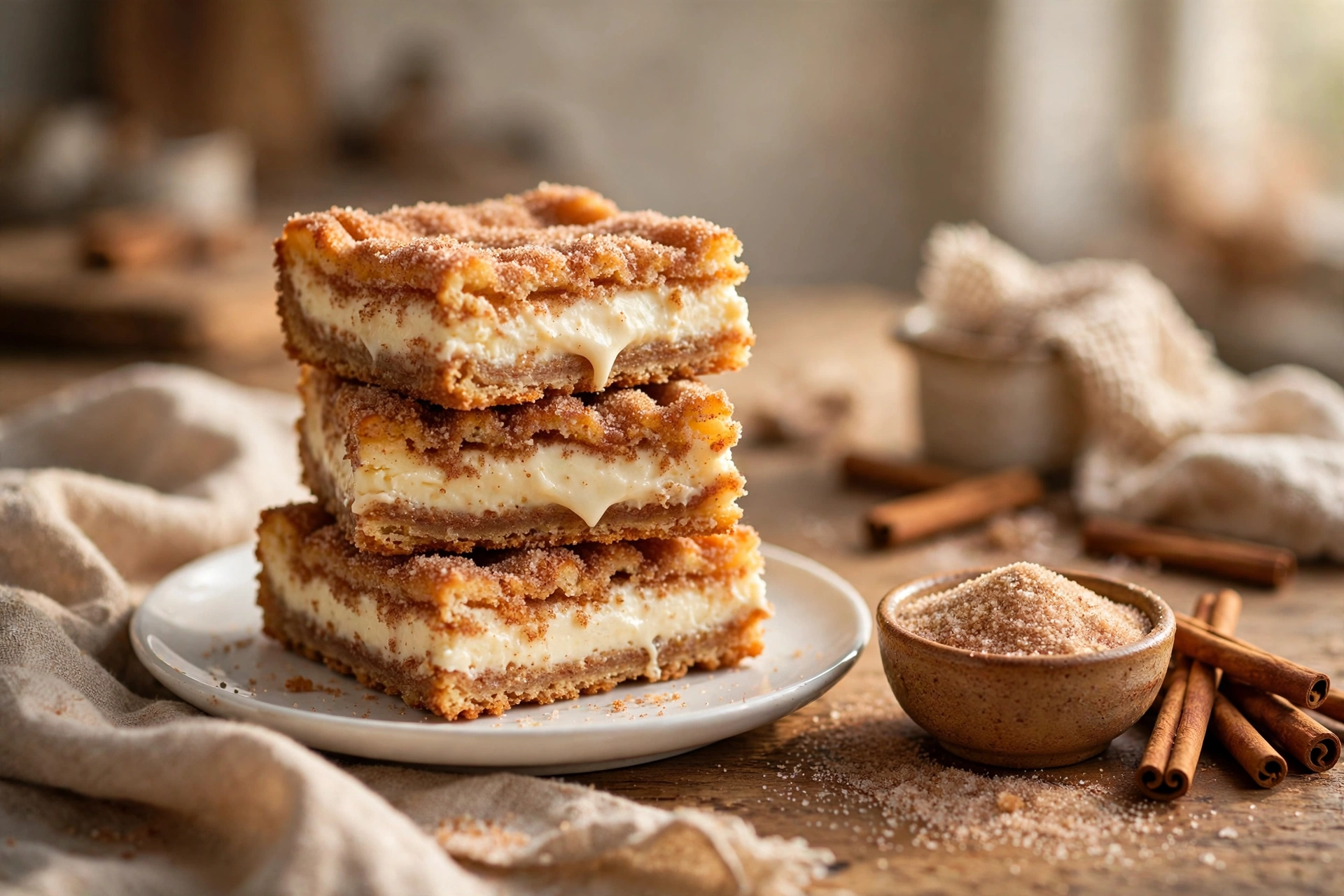
If you want to keep cooking in this direction, try Churro Cheesecake Bars — Cinnamon-Sugar Bliss and Healthy Banana Oatmeal Muffins — No Refined Sugar.
Cinnamon Sugar Donut Muffins
Ingredients
Method
- Oven on. Preheat to 350 degrees F. Grease a standard 12-cup muffin tin well, including the flat top surface, or use a mini muffin tin for 24 small muffins.
- Dry bowl. Whisk the flour, baking powder, salt, cinnamon, nutmeg, and sugar in a large bowl until evenly combined.
- Wet bowl. In a second bowl or a large measuring jug, whisk the egg, milk, melted butter, and vanilla until smooth.
- Combine, gently. Wet into dry, stirred with a spatula just until no streaks of flour remain, 10 to 12 strokes. Thick and a little lumpy is correct.
- Fill. Batter divided evenly among the cups, about two thirds full each. A cookie scoop keeps this tidy.
- Bake. Sixteen to 18 minutes for standard muffins, 10 to 12 for minis, until the tops spring back when pressed and a toothpick comes out clean.
- Brief cool. Five minutes in the tin, then out onto a rack. Warm, not hot, is the coating window.
- Roll. Sugar and cinnamon stirred together in a shallow bowl. Brush each muffin all over with melted butter, roll in the cinnamon sugar until fully coated, back on the rack for about 10 minutes so the shell sets.

1 Comment