
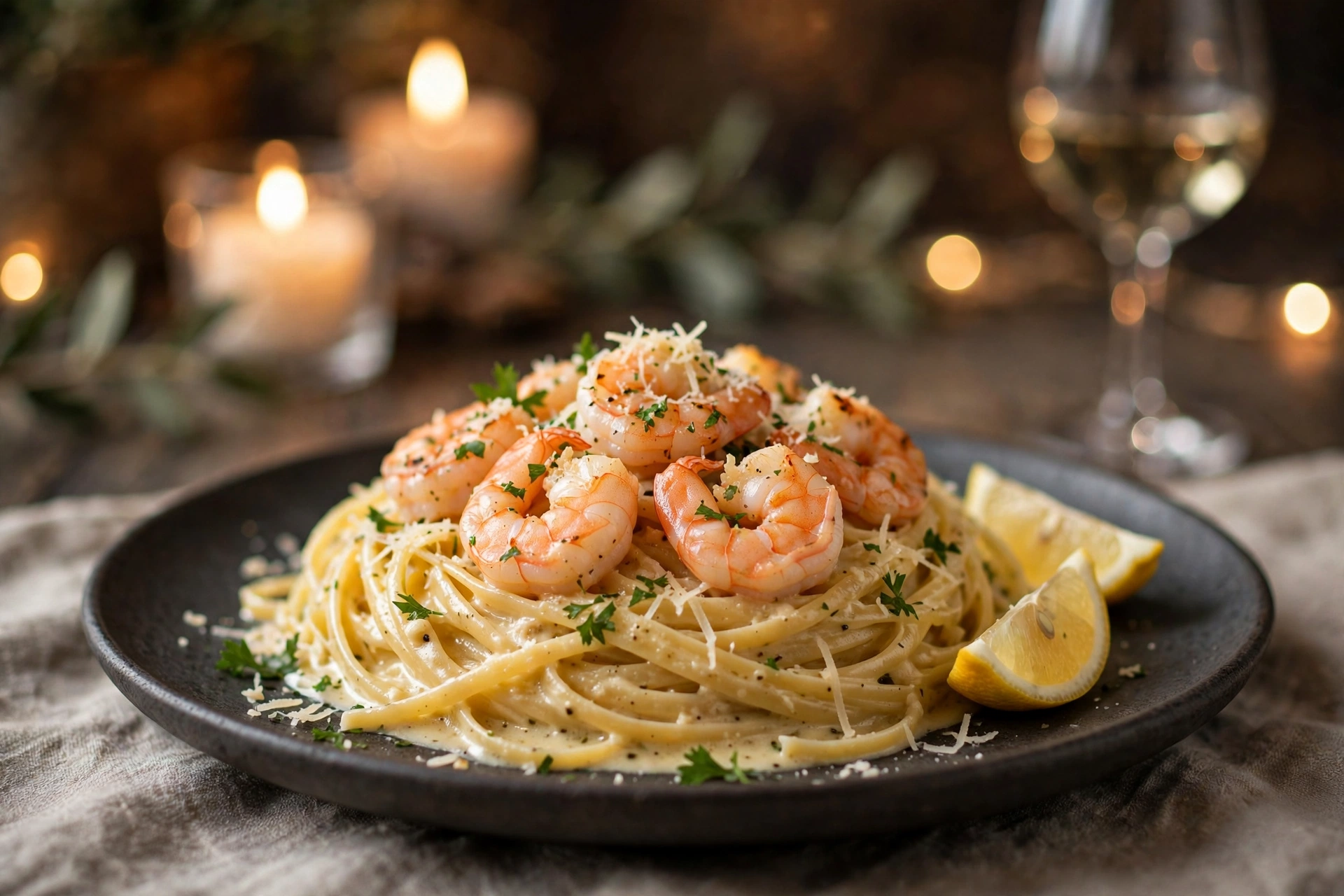
Some dinners are for fuel. This one is for the nights that matter — the anniversary you forgot was this week, the Friday you both survived, the evening you just want to feel a little fancy without leaving the house. Creamy garlic butter shrimp pasta looks and tastes like something from a white-tablecloth restaurant, but it comes together in 30 minutes with ingredients you probably already have. Plump, snappy shrimp folded into a silky garlic-Parmesan cream sauce with linguine — it’s the kind of meal that makes an ordinary Tuesday feel intentional.
I’ve made this dish more times than I can count, and I’ve made every mistake in the book along the way: rubbery shrimp, broken sauce, bland pasta water crimes. The recipe below is the distillation of all those mistakes into something foolproof. The two things that matter most — shrimp cooked to exactly the right doneness, and a sauce built on proper technique rather than hope — are both covered in detail below.
Why You’ll Love This Recipe
- 30 minutes, one pan for the sauce. Faster than takeout, fancier than takeout, cheaper than takeout.
- Restaurant-quality sauce. Silky, garlicky, rich — built on real technique, not a jar.
- Perfect shrimp every time. A clear doneness guide means no more rubbery shrimp, ever.
- Date-night impressive, weeknight easy. It looks like effort. It isn’t much.
- Customizable heat and richness. Dial the red pepper flakes and cream to your taste.
- Leftovers reheat well (with one trick — see Storage).
Ingredients
- 12 oz linguine or fettuccine — Long pasta is the classic pairing; the sauce clings to every strand. Linguine is my pick — slightly narrower than fettuccine, so the sauce-to-pasta ratio feels right. Cook it just shy of al dente since it finishes in the sauce.
- 1 1/2 lbs large shrimp (21/25 count), peeled and deveined, tails on or off — Large shrimp stay juicy and give you that satisfying bite; small shrimp overcook in seconds. Buy them peeled and deveined to save time, or do it yourself — it takes 10 minutes and the shells make great stock. Pat them very dry. Wet shrimp steam instead of sear.
- 5 tablespoons unsalted butter, divided — Butter in two additions: some for searing the shrimp, the rest for building the sauce. Unsalted lets you control the salt, since Parmesan brings plenty.
- 6 cloves garlic, minced — Yes, six. This is garlic butter shrimp pasta — timidity has no place here. Mince it fine so it melts into the sauce rather than showing up as raw-tasting chunks.
- 1/2 teaspoon red pepper flakes, plus more to taste — A gentle background warmth. Bump it to a full teaspoon if you like heat.
- 1 cup heavy cream — Heavy cream (not half-and-half, not milk) is what makes the sauce luxuriously thick and stable. Lower-fat dairy is far more likely to curdle when it hits the hot pan.
- 3/4 cup freshly grated Parmesan cheese — Freshly grated, always. Pre-grated Parmesan contains anti-caking starches that make sauces grainy instead of silky.
- 1/2 cup dry white wine (like Pinot Grigio) or chicken broth — Wine adds acidity and complexity that cuts the richness. The alcohol cooks off in a minute. If you’d rather skip it, broth works — add a squeeze of lemon to replace the brightness.
- 1 teaspoon Italian seasoning
- Salt and freshly ground black pepper, to taste
- 2 tablespoons fresh parsley, chopped — For freshness and color at the end.
- 1 tablespoon fresh lemon juice — Stirred in off the heat. Brightens the entire dish.
- Lemon wedges, for serving
How to Make It
- Boil the pasta. Bring a large pot of generously salted water to a rolling boil (it should taste like the sea). Cook the linguine 1 minute less than the package’s al dente time — it will finish cooking in the sauce. Before draining, reserve 1 cup of the starchy pasta water. This liquid gold is your sauce insurance policy.
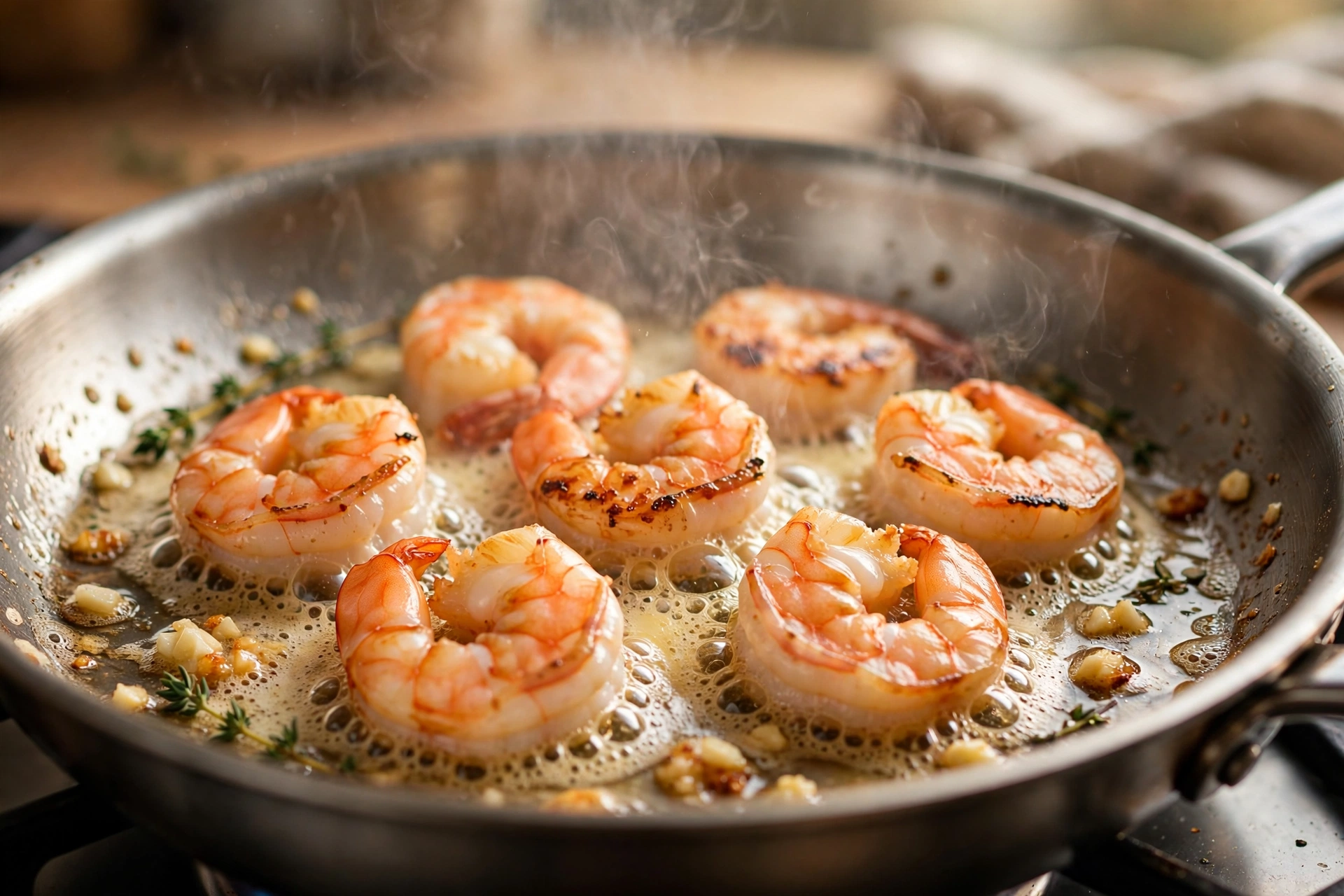
- Sear the shrimp. While the pasta cooks, pat the shrimp completely dry and season with salt, pepper, and half the Italian seasoning. Heat 2 tablespoons of butter in a large skillet over medium-high heat until foaming. Add the shrimp in a single layer (work in two batches if needed) and sear 1 1/2 to 2 minutes per side. You’re looking for pink, opaque flesh that just curls into a C shape. Transfer to a plate immediately — they finish cooking in the residual heat.
- Build the flavor base. Reduce the heat to medium. Add the remaining 3 tablespoons of butter to the same skillet. When melted, add the garlic and red pepper flakes. Cook 30 to 60 seconds, stirring constantly, until fragrant and just barely golden. Do not let the garlic brown — browned garlic turns bitter and there’s no saving the sauce after that.
- Deglaze. Pour in the white wine (or broth), scraping up all the browned bits from the bottom of the pan with a wooden spoon. Those bits are concentrated flavor. Let it simmer 1 to 2 minutes until reduced by about half.
- Make it creamy. Pour in the heavy cream and add the remaining Italian seasoning. Bring to a gentle simmer — not a boil — and cook 2 to 3 minutes, stirring, until slightly thickened. It should coat the back of a spoon.
- Add the cheese. Remove the pan from the heat (this is important — more on why below) and sprinkle in the Parmesan a handful at a time, stirring until melted and smooth before adding more.
- Combine. Add the drained pasta to the sauce along with a splash of the reserved pasta water. Toss vigorously for 1 to 2 minutes — the pasta finishes cooking and the starch in the water helps the sauce cling to every strand. If the sauce is too thick, add more pasta water a splash at a time.
- Finish. Return the shrimp to the pan, toss gently to warm through (30 seconds — no more), then stir in the lemon juice and parsley. Taste and adjust salt and pepper. Serve immediately with lemon wedges and extra Parmesan.
Shrimp Doneness Guide
Shrimp cook fast and the window between perfect and rubbery is about 60 seconds. Here’s how to nail it:
- The C vs. O test: Perfectly cooked shrimp curl into a loose C shape. If they’ve curled into a tight O, they’re overcooked. Watch the shape as they cook.
- Color cues: Raw shrimp are gray and translucent. Done shrimp are pink-orange and opaque all the way through, with no gray translucent spots in the thickest part.
- Time: At medium-high heat, large (21/25) shrimp need 1 1/2 to 2 minutes per side. That’s it. Set a timer if you’re nervous.
- Carryover cooking: Shrimp keep cooking after they leave the pan. Pull them when they just turn opaque — they’ll finish on the plate while you make the sauce.
- The squeeze test: Done shrimp feel firm with a slight spring when pressed. Mushy = undercooked; hard and rigid = overcooked.
Sauce Science: Why It Works
A cream sauce breaks (turns grainy or oily) for two reasons: heat shock and cheese added too fast. Here’s the chemistry in plain English:
- Why heavy cream, not milk: Heavy cream is about 36% fat. Fat stabilizes the sauce — it coats the proteins and keeps them from clumping into curds when heated. Milk and half-and-half have less fat armor, so they’re far more likely to split.
- Why off the heat for cheese: Parmesan’s proteins seize and turn grainy above about 180°F. Taking the pan off the heat drops the temperature into the safe zone, so the cheese melts smoothly instead of clumping.
- Why pasta water: The starch in pasta water acts as an emulsifier — it helps the fat in the cream and butter stay suspended in the liquid instead of pooling on top. A splash of pasta water is the difference between a sauce that coats and a sauce that slides off.
- Why not to boil: A rolling boil can still break even a heavy-cream sauce. A gentle simmer thickens; a hard boil risks splitting. Patience pays.
Pro Tips
- Mise en place is mandatory. This dish moves fast once the shrimp hit the pan. Have everything minced, measured, and within arm’s reach before you start. I learned this the hard way while mincing garlic one-handed as the shrimp overcooked.
- Don’t crowd the shrimp. Crowded shrimp steam; spaced shrimp sear. Two batches take 4 extra minutes and produce dramatically better shrimp.
- Salt the pasta water aggressively. The pasta absorbs this water as it cooks — it’s your only chance to season the pasta itself. Unsalted pasta water = bland pasta no sauce can fully fix.
- Grate your own Parmesan. I’ve said it before and I’ll say it again: the pre-grated stuff makes grainy sauce. A $8 wedge and a box grater take 2 minutes.
- Tails on or off? Tails look prettier for date night and give you a little handle. Tails off are easier to eat. There’s no wrong answer — just decide before you start cooking, not mid-sear.
- What went wrong in testing: My early versions added the Parmesan over full heat, and the sauce turned into a grainy, separated mess twice before I figured out the off-heat trick. Also, my first attempt used medium shrimp — they went from raw to rubber in what felt like seconds. Large shrimp are far more forgiving.
Variations
- Cajun shrimp pasta: Swap the Italian seasoning for 2 tablespoons of Cajun seasoning and add sliced bell peppers with the garlic. Smoky, spicy, incredible.
- Lemon-garlic (lighter): Skip the cream; after deglazing, toss the pasta with the garlic butter, extra lemon juice, and pasta water, then top with shrimp and Parmesan. Bright and less rich.
- Add vegetables: Wilted spinach, sun-dried tomatoes, or roasted cherry tomatoes all fold in beautifully at the end. Asparagus tips, blanched, are lovely in spring.
- Spicy Diablo: Double the red pepper flakes and add a diced Fresno chile with the garlic. Serve with crusty bread — you’ll want it for the sauce.
- Surf and turf: Add sliced grilled chicken alongside the shrimp for the full restaurant experience.
If pasta night is your love language, my one-pot chicken Alfredo pasta is another creamy 30-minute winner, and one-pan creamy Tuscan chicken brings the same silky sauce energy with chicken instead of shrimp. If you enjoyed this recipe, you’ll also love my Stylish Sesame Noodles with Creamy Sauce & Quick Pickles.
Storage & Meal Prep
- Refrigerator: Store in an airtight container for up to 3 days. The pasta will absorb sauce as it sits — that’s normal.
- Reheating (the trick): Reheat gently in a skillet over low heat with a splash of cream or milk, stirring, until just warmed through. The added liquid re-emulsifies the sauce. Microwaving works in a pinch — 50% power, 1-minute bursts, stirring between — but the skillet method is noticeably better.
- Freezer: I don’t recommend freezing this one. Cream sauces separate when thawed, and reheated shrimp turn rubbery. It’s a 30-minute recipe — just make it fresh.
- Make-ahead components: You can peel and devein the shrimp, mince the garlic, and grate the Parmesan up to a day ahead. Store separately in the fridge. The actual cooking should happen just before serving.
- Date-night timing: If you’re cooking for someone special, have everything prepped before they arrive. The whole cook takes 20 minutes, and you’ll look impressively calm.
FAQs
Can I use frozen shrimp?
Absolutely — most “fresh” shrimp at the counter was frozen anyway. Thaw overnight in the fridge, or in a pinch, in a bowl of cold water for 20 minutes. The critical step: pat them very dry before searing. Thawed shrimp hold a lot of water.
Can I use half-and-half instead of heavy cream?
You can, but the sauce will be thinner and more prone to curdling. If you do, keep the heat very low, never let it boil, and consider whisking in a teaspoon of cornstarch slurry to help it thicken. Honestly, for the 60-cent difference, use the heavy cream.
Why did my sauce turn grainy?
The cheese was added when the pan was too hot, or added all at once. Fix for next time: off the heat, handful by handful, stirring between additions. For the current batch, a splash of warm pasta water whisked vigorously can sometimes bring it back.
What pasta shape works best?
Long shapes — linguine, fettuccine, spaghetti — because the creamy sauce coats every strand. Short shapes like penne work too, but you’ll want extra sauce since it pools in the tubes (which is honestly delicious).
Can I make this dairy-free?
You can get close: use olive oil instead of butter, full-fat coconut milk instead of cream, and nutritional yeast instead of Parmesan. It won’t taste identical, but it’s still a tasty garlic shrimp pasta. The sauce will be a bit thinner — reduce it a minute longer.
How do I keep the shrimp from getting rubbery in leftovers?
Store the shrimp separately from the pasta if you can, and reheat them very gently — just until warmed through. Better yet, cook only the shrimp you’ll eat and save the plain sauced pasta; sear fresh shrimp in 4 minutes when you reheat.
Creamy Garlic Butter Shrimp Pasta
Prep Time: 10 minutes | Cook Time: 20 minutes | Total Time: 30 minutes | Servings: 4
Ingredients
- 12 oz linguine or fettuccine
- 1 1/2 lbs large shrimp (21/25), peeled and deveined
- 5 tablespoons unsalted butter, divided
- 6 cloves garlic, minced
- 1/2 teaspoon red pepper flakes
- 1/2 cup dry white wine or chicken broth
- 1 cup heavy cream
- 3/4 cup freshly grated Parmesan cheese
- 1 teaspoon Italian seasoning
- Salt and freshly ground black pepper, to taste
- 2 tablespoons fresh parsley, chopped
- 1 tablespoon fresh lemon juice
- Lemon wedges, for serving
Instructions
- Cook linguine in well-salted water 1 minute shy of al dente; reserve 1 cup pasta water, then drain.
- Pat shrimp dry; season with salt, pepper, and half the Italian seasoning. Sear in 2 tbsp butter over medium-high heat, 1 1/2–2 minutes per side, until just opaque and C-shaped. Remove to a plate.
- In the same skillet over medium heat, melt remaining butter; cook garlic and red pepper flakes 30–60 seconds until fragrant.
- Deglaze with wine or broth, scraping up browned bits; simmer 1–2 minutes until halved.
- Add cream and remaining Italian seasoning; simmer gently 2–3 minutes until slightly thickened.
- Remove from heat; stir in Parmesan a handful at a time until smooth.
- Toss pasta into sauce with splashes of pasta water until silky and well-coated, 1–2 minutes.
- Return shrimp to pan for 30 seconds; stir in lemon juice and parsley. Serve immediately with lemon wedges.
That’s the whole playbook: dry shrimp, hot pan, garlic treated gently, cheese off the heat, pasta water as your secret weapon. Master those five things and this creamy garlic butter shrimp pasta will taste like the restaurant version every single time — except you made it in half an hour, in your own kitchen, probably in sweatpants. Light some candles anyway. You earned it.