
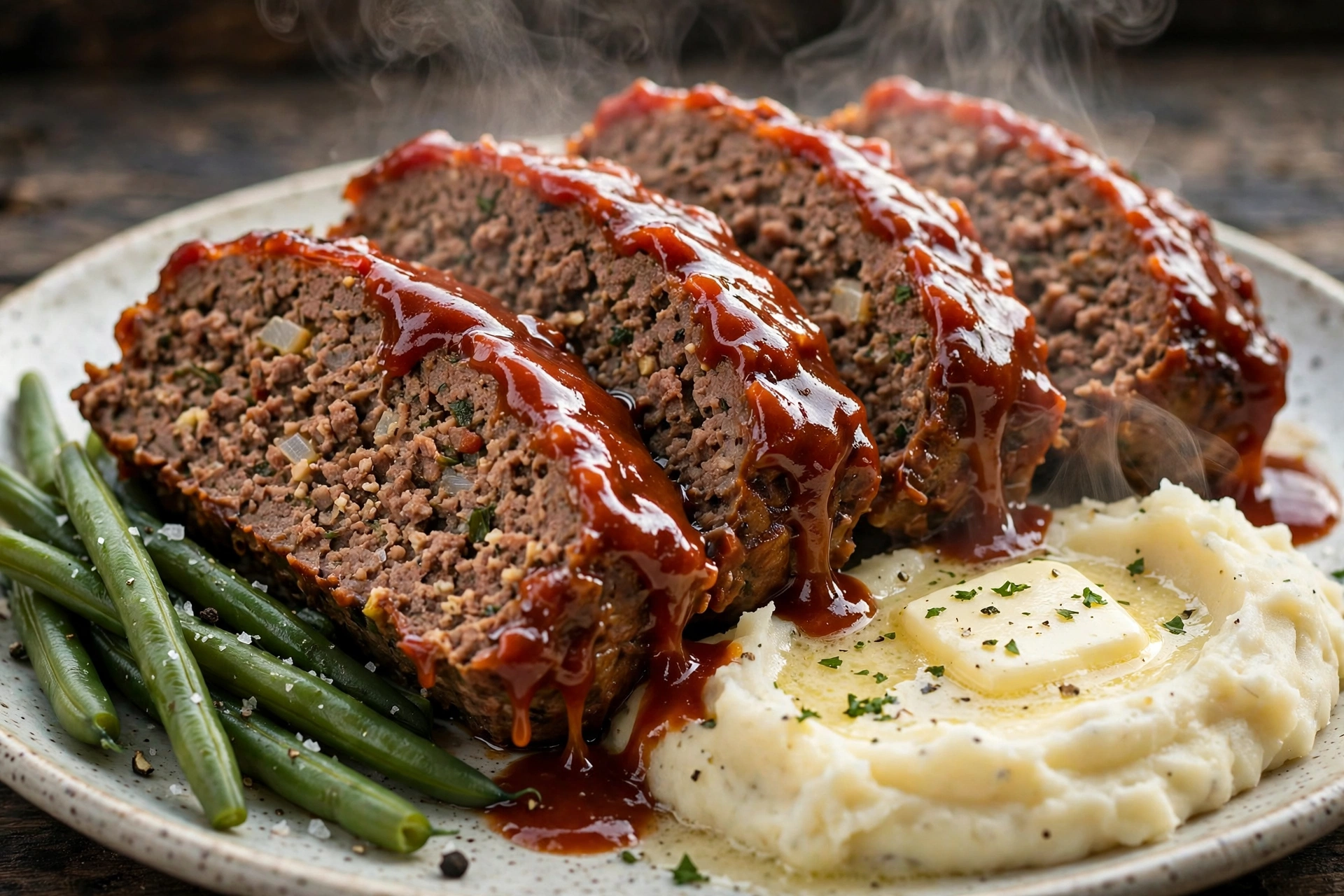
Every family has a meatloaf story, and most of them end the same way: dry. Crumbly. A slice that needs a flood of ketchup just to get down. If that’s your history with this dish, I get it, and I’m asking you to give it one more shot, because a classic meatloaf done right is juicy, deeply savory, and slicked with a tangy glaze that caramelizes at the edges. It’s weeknight comfort food at its finest, and the leftovers might honestly be better than the first serving.
The fix is not fancy. It comes down to one old-fashioned technique, a panade, which sounds like something from a culinary exam and is actually just breadcrumbs soaked in milk. That paste keeps the meat tender as it bakes. Two pounds of ground beef, a handful of pantry staples, one loaf pan. Dinner handles itself from there.
What Makes This Meatloaf Different
Most meatloaf recipes fail for one of three reasons. The mix gets worked too hard, which turns the texture dense and springy, like a giant meatball. The binder is dry, so the loaf bakes up crumbly. Or it cooks past the point of no return while everyone waits for the top to brown.
This version handles all three. The panade locks in moisture. The mixture gets folded gently, with wet hands, just until combined. And a two-stage glaze goes on partway through baking, so it sets into a glossy coat instead of sliding off or scorching. A thermometer does the final quality control, not a guess.
Ingredients
For the meatloaf:
- 2 pounds (900 g) ground beef, 80/20, not leaner
- 1 cup (60 g) panko breadcrumbs
- 1/2 cup (120 ml) whole milk
- 1 medium yellow onion, finely diced, about 1 cup
- 2 cloves garlic, minced
- 2 large eggs, lightly beaten
- 2 tablespoons ketchup
- 1 tablespoon Worcestershire sauce
- 1 1/2 teaspoons kosher salt
- 1 teaspoon dried Italian seasoning
- 1/2 teaspoon black pepper
- 2 tablespoons fresh parsley, chopped, plus more for serving
For the glaze:
- 3/4 cup ketchup
- 2 tablespoons brown sugar
- 1 tablespoon apple cider vinegar
- 1 teaspoon garlic powder
- 1/2 teaspoon onion powder
About the beef: 80/20 is doing real work here. Lean 90/10 ground beef makes a noticeably drier loaf, no matter how good the panade is. If you want to lighten things up, swap half the beef for ground turkey and add a drizzle of olive oil to the mix.
Step-by-Step Instructions
- Heat the oven and prep the pan. Set the oven to 350°F (175°C). Line a 9 by 5 inch loaf pan with a sling of parchment paper so the loaf lifts out cleanly, or shape the loaf free-form on a rimmed baking sheet lined with foil.
- Make the panade. Stir the panko and milk together in a large mixing bowl and let it sit for 5 minutes, until it looks like a thick paste. This paste is the whole secret, so don’t rush it.
- Soften the onion. While the panade rests, cook the diced onion in a teaspoon of oil over medium heat for 4 to 5 minutes, until soft and sweet. Add the garlic for the last 30 seconds. Raw onion stays crunchy in a meatloaf; cooked onion melts right in. Let it cool for a couple of minutes.
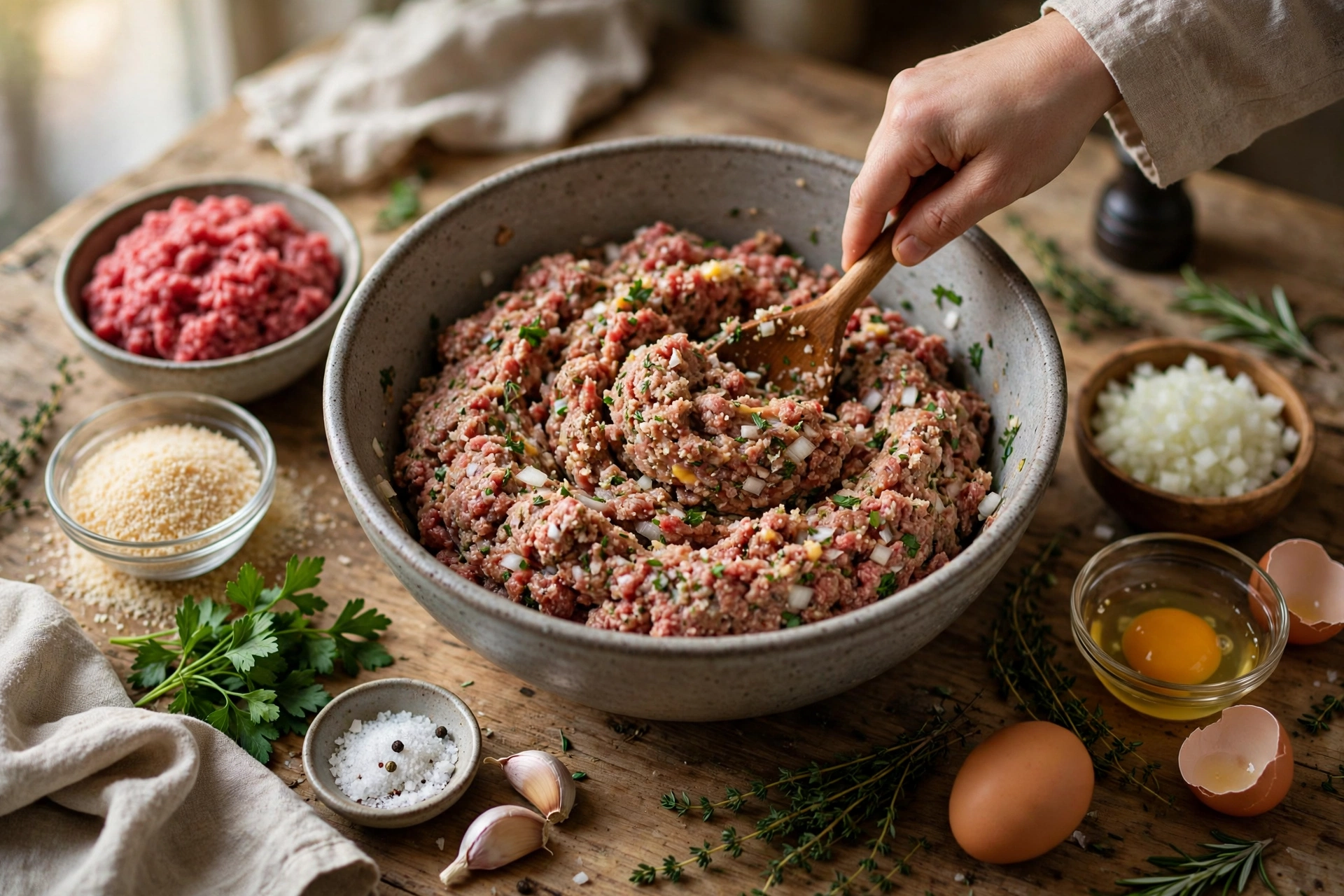
- Combine, gently. Add the beef, eggs, ketchup, Worcestershire, salt, Italian seasoning, pepper, parsley, and the warm onion mixture to the panade. Mix with your hands just until everything is evenly distributed, about 30 seconds of folding. The moment it looks uniform, stop.
- Shape the loaf. Press the mixture into the prepared pan, smoothing the top and rounding the edges slightly so the glaze pools nicely. Don’t pack it down hard; a light hand keeps the texture tender.
- First bake. Bake uncovered for 40 minutes. Meanwhile, whisk all the glaze ingredients together in a small bowl.
- Glaze, twice. Pull the loaf out, spoon half the glaze over the top, and spread it edge to edge. Bake 10 more minutes, add the rest of the glaze, and bake a final 10 to 15 minutes.
- Check the temperature. The loaf is done when a thermometer in the center reads 160°F (71°C), usually at 55 to 65 minutes total. No thermometer? The juices should run clear and the loaf should feel firm with a slight spring.
- Rest before slicing. Rest the meatloaf for at least 10 minutes. Cut it too soon and all that juice you worked to keep ends up on the cutting board instead of in the slice.
Mistakes That Dry Out a Meatloaf
Overmixing. Working ground beef too long develops the proteins that make sausage snappy. In a meatloaf, that means dense and rubbery. Fold, don’t knead.
Skipping the rest. Ten minutes of resting lets the juices redistribute through the loaf. Slice early and they pour straight out.
Guessing doneness. Five extra minutes in the oven can cost you a moist loaf. A basic instant-read thermometer runs about ten dollars and removes the guesswork from every roast, chop, and loaf you make from here on.
Using a glass pan without adjusting. Glass holds heat longer and can overcook the edges. If that’s your only loaf pan, start checking the temperature 10 minutes early.
What to Serve With It
Mashed potatoes are the classic partner, and for good reason: they catch the extra glaze. On busy nights I rotate in sides from the site, like these honey balsamic roasted carrots or the maple bacon Brussels sprouts, which bring a little sweetness that plays well with the tangy topping. A simple green salad with a sharp vinaigrette cuts through the richness nicely too. And if comfort food is the theme of your week, our slow cooker beef stew belongs on the same menu.
Make It a Free-Form Loaf, or Muffin-Tin Minis
The loaf pan is traditional, but it isn’t the only way to bake this mixture. Shaped free-form on a baking sheet, the loaf develops more of those sticky, caramelized edges, and it cooks about 5 minutes faster because the heat reaches the center more easily. Just keep the shape even, about 4 inches wide, so it bakes uniformly from end to end.
For weeknights when time is tight, press the mixture into a greased muffin tin instead. You get twelve individual mini loaves that bake in 22 to 25 minutes, portioned and ready to go. Kids love having their own. Spoon a little glaze on each one, and check the temperature the same way, 160°F (71°C) in the middle of a center muffin. Minis also freeze beautifully for single-serving meals down the road; thaw one in the fridge overnight and warm it through in a covered skillet.
One more option for a crowd: double the recipe and bake it in a 9 by 13 inch pan, pressing the mixture to an even thickness of about 1 1/2 inches. Glaze the whole top, bake until the center hits temperature (start checking at 45 minutes), then cut it into squares at the table. It feeds a table of hungry people with zero ceremony, which is sometimes exactly what a Tuesday needs.
Storage, Freezing, and Reheating
Leftover meatloaf keeps in the fridge for 3 to 4 days, well wrapped or in an airtight container. Cold slices make an excellent sandwich on toasted bread with a smear of mayo and a leaf of lettuce; plenty of people argue that’s the whole point of making meatloaf in the first place.
To reheat without drying it out, place slices in a skillet with a splash of water or broth, cover, and warm over low heat for 5 to 6 minutes. A fresh spoonful of glaze on top brings it right back to life.
For the freezer, wrap individual slices tightly and freeze for up to 3 months. You can also freeze the raw, shaped loaf: thaw it overnight in the fridge, then bake as directed, adding the glaze on the same schedule.
Frequently Asked Questions
Can I make meatloaf without a loaf pan?
Absolutely. Shape the mixture into a loaf about 9 by 5 inches on a foil-lined baking sheet. A free-form loaf actually gets more caramelized edges, since more surface meets the glaze.
Why did my meatloaf fall apart?
It probably needed more binder or less rough handling. Make sure the panade is a true paste before the meat goes in, and let the loaf rest the full 10 minutes; hot meatloaf slices crumble, rested meatloaf slices clean.
Can I prep it the night before?
Yes. Assemble the loaf, cover it, and refrigerate for up to 24 hours. Add about 5 minutes to the first bake since it starts cold. Hold the glaze until baking day.
What can I use instead of breadcrumbs?
Crushed saltine crackers work cup for cup. Rolled oats are another solid swap; pulse them a few times so there are no whole flakes in the finished loaf.
Nutrition Estimate
Per serving (based on 8 servings, glaze included): about 420 calories, 26 g protein, 24 g fat, 22 g carbohydrates, 12 g sugar, 640 mg sodium. Figures come from a standard nutrition calculator, so treat them as a good estimate rather than a lab result.
Make it once, exactly as written. Then make it yours: a pinch of smoked paprika, a sharper vinegar, a little hot sauce in the glaze. That is how a classic earns its place in the rotation.
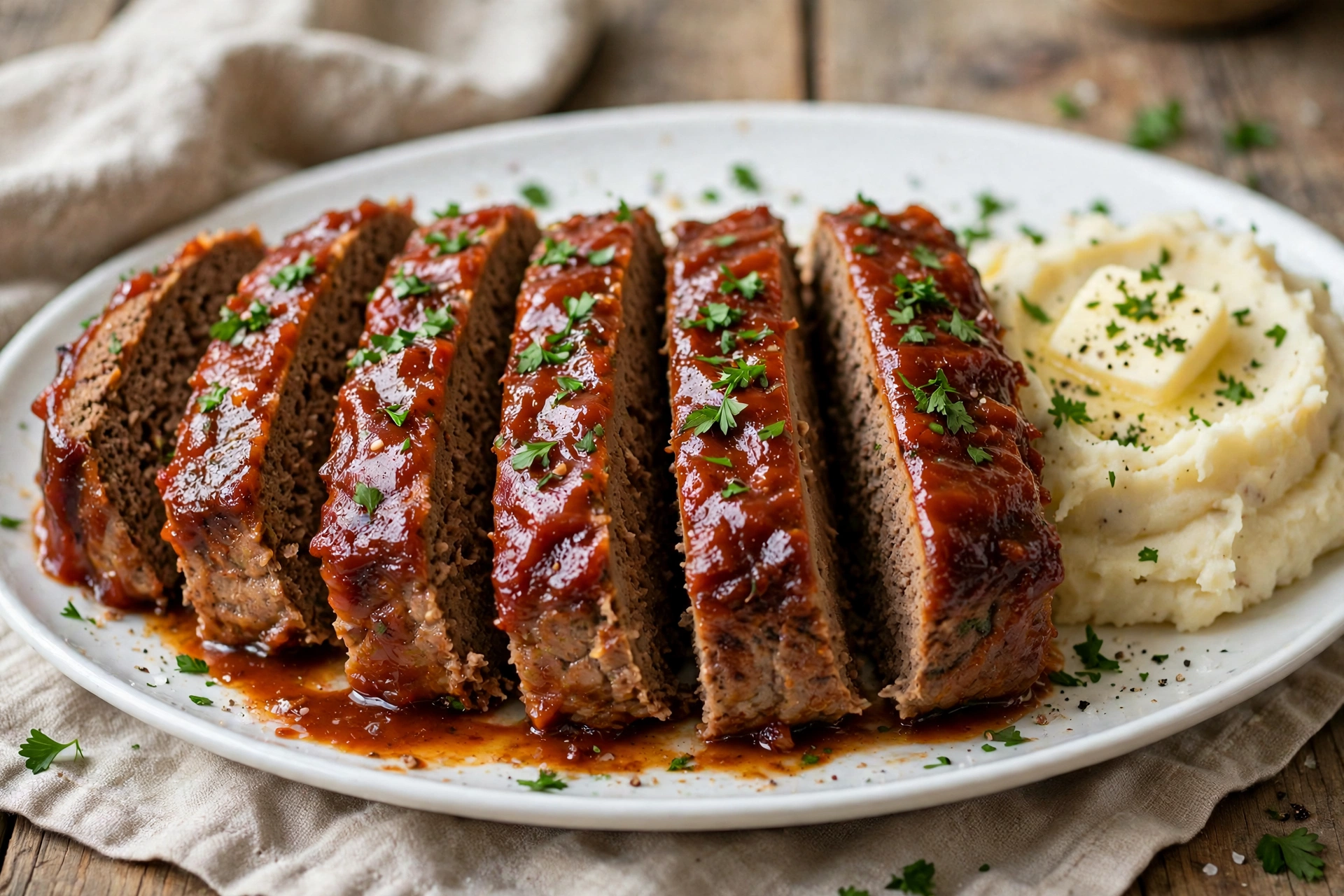
Classic Meatloaf with Tangy Glaze
Ingredients
Equipment
Method
- Heat the oven and prep the pan. Set the oven to 350°F (175°C). Line a 9 by 5 inch loaf pan with a sling of parchment paper so the loaf lifts out cleanly, or shape the loaf free-form on a rimmed baking sheet lined with foil.
- Make the panade. Stir the panko and milk together in a large mixing bowl and let it sit for 5 minutes, until it looks like a thick paste. This paste is the whole secret, so don’t rush it.
- Soften the onion. While the panade rests, cook the diced onion in a teaspoon of oil over medium heat for 4 to 5 minutes, until soft and sweet. Add the garlic for the last 30 seconds. Raw onion stays crunchy in a meatloaf; cooked onion melts right in. Let it cool for a couple of minutes.
- Combine, gently. Add the beef, eggs, ketchup, Worcestershire, salt, Italian seasoning, pepper, parsley, and the warm onion mixture to the panade. Mix with your hands just until everything is evenly distributed, about 30 seconds of folding. The moment it looks uniform, stop.
- Shape the loaf. Press the mixture into the prepared pan, smoothing the top and rounding the edges slightly so the glaze pools nicely. Don’t pack it down hard; a light hand keeps the texture tender.
- First bake. Bake uncovered for 40 minutes. Meanwhile, whisk all the glaze ingredients together in a small bowl.
- Glaze, twice. Pull the loaf out, spoon half the glaze over the top, and spread it edge to edge. Bake 10 more minutes, add the rest of the glaze, and bake a final 10 to 15 minutes.
- Check the temperature. The loaf is done when a thermometer in the center reads 160°F (71°C), usually at 55 to 65 minutes total. No thermometer? The juices should run clear and the loaf should feel firm with a slight spring.
- Rest before slicing. Rest the meatloaf for at least 10 minutes. Cut it too soon and all that juice you worked to keep ends up on the cutting board instead of in the slice.