
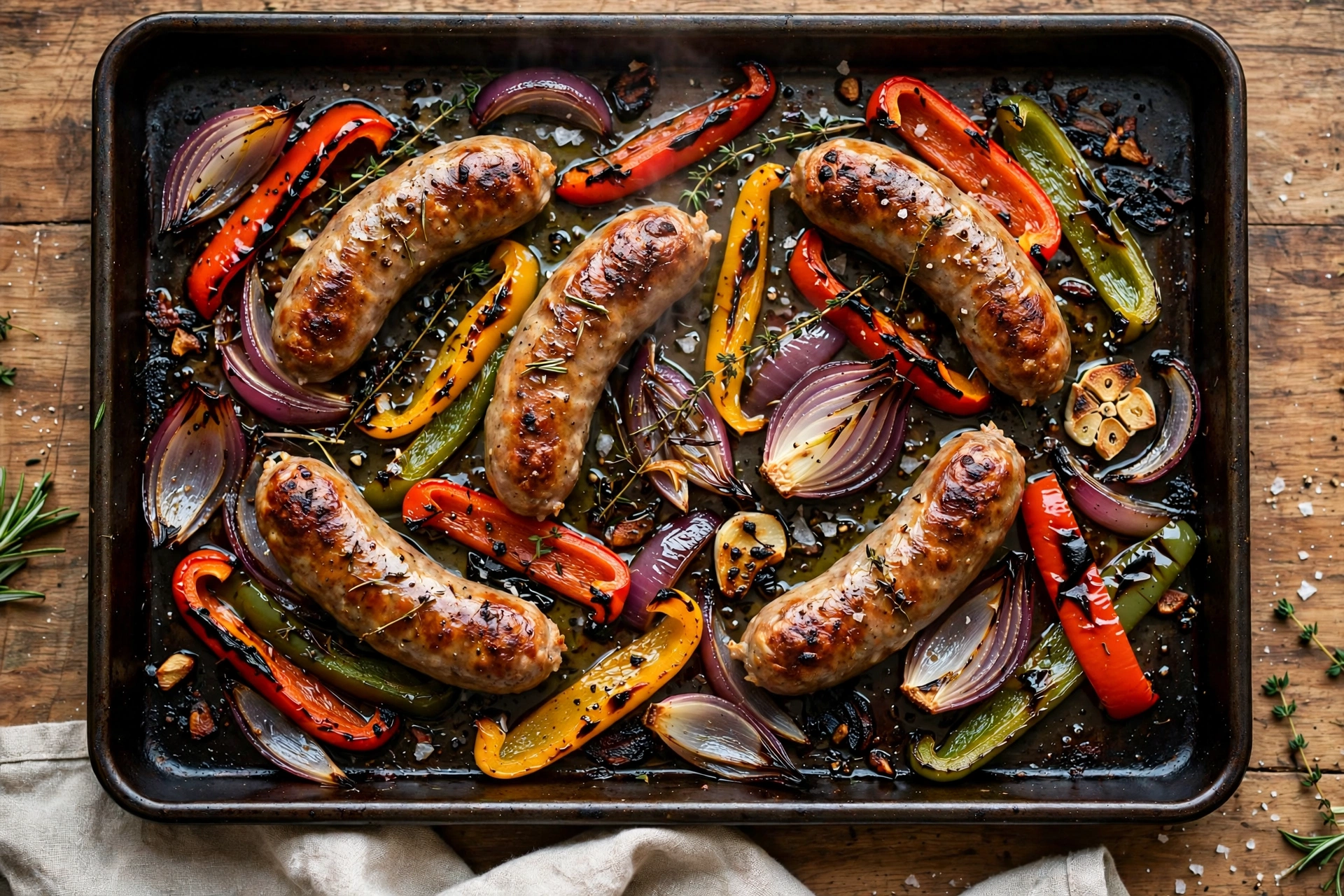
This is the dinner for the day that used up all your decisions. Smoky Italian sausage, sweet bell peppers, red onion, a pinch of fennel and oregano, everything roasting on one pan until the edges char and the juices mingle into something far better than the sum of its parts. Pile it onto hoagie rolls with provolone. Spoon it over polenta or pasta. Eat it straight off the pan, standing at the counter. All three are correct.
The active work is about ten minutes of slicing. The oven handles the rest, which is why this lives in the weeknight rotation and quietly saves every crowd-feeding occasion without anyone standing over a stove.
One Pan, High Heat, No Fuss
- Space plus heat equals char. At 425 degrees F, in a true single layer, the peppers caramelize and the sausage browns instead of steaming in a pile.
- The vegetables keep the sausage’s schedule. Peppers and onions soften and sweeten in exactly the time the links need, so nothing comes out raw and nothing comes out mush.
- The pan juices are the sauce. Sausage drippings, olive oil, and vegetable juices pool into a savory glaze that coats everything when you toss at the end.
- Fennel echoes the sausage. A small pinch amplifies the Italian sausage flavor and makes the whole pan taste intentional.
The Pan Roster
- 1 1/2 pounds Italian sausage links (sweet, hot, or a mix), about 6 links
- 3 large bell peppers (mixed colors), seeded and sliced into 1/2-inch strips
- 1 large red onion, cut into 1/2-inch wedges
- 3 tablespoons olive oil
- 3 garlic cloves, minced
- 1 teaspoon dried oregano
- 1/2 teaspoon fennel seeds, lightly crushed (optional but recommended)
- 1/2 teaspoon kosher salt
- 1/2 teaspoon black pepper
- 1/4 teaspoon red pepper flakes (optional)
- 1 tablespoon balsamic vinegar or red wine vinegar
- 1/4 cup chopped fresh parsley or basil
- Hoagie rolls and sliced provolone, for serving (optional)
Roasting, Plain and Simple
- Oven hot. Preheat to 425 degrees F. Parchment on a large rimmed sheet pan makes cleanup easy; a bare pan browns slightly better. Your call.
- Season the vegetables on the pan. Pepper strips and onion wedges tossed with the olive oil, garlic, oregano, fennel seeds, salt, black pepper, and red pepper flakes until glossy and evenly coated. Spread into a single layer.
- Sausage joins. Nestle the links among the vegetables, turning each once in the oil so it starts seasoned. Prick each link once or twice with a fork to let steam escape.
- First roast. Twenty minutes. The peppers soften, the sausages sit pale on top. Normal.
- Flip and finish. Turn the sausages, stir the vegetables, spread everything back into a single layer. Twelve to 15 minutes more, until the links are deeply browned and read 160 degrees F and the vegetables are tender with charred edges.
- Optional broil. One to 2 minutes at the end for extra char, watched closely.
- The finish. Vinegar drizzled over, everything tossed in the pan juices. Parsley or basil showered on top.
- Serve your way. Into hoagie rolls with provolone, run under the broiler a minute to melt, or over pasta, polenta, rice, or mashed potatoes.
Where People Go Wrong
- The pan’s too small. Crowding is the enemy. Vegetables piled up? Split them across two pans and rotate halfway.
- Chunks instead of strips. Strips soften, slump, and char at the edges in a way chunks never do. They also drape over a sandwich properly.
- Loose onion petals. Cut through the root end so the wedges hold together; they caramelize far better than scattered pieces.
- Skipping the vinegar. One tablespoon at the end brightens the rich sausage fat and balances the whole pan. Don’t skip it.
- Slicing the sausage immediately. Serving it sliced over pasta? Rest 5 minutes first so the juices stay in the meat.
Variations for the Rotation
- Potatoes join. One pound of baby potatoes, halved, with a 10-minute head start on the pan before everything else lands.
- Chicken sausage. A lighter swap, same timing; check for 165 degrees F.
- Giardiniera finish. Chopped pickled giardiniera spooned over the top for a Chicago-style kick.
- Tomato version. A pint of cherry tomatoes for the final 15 minutes; they burst into the pan juices and make a rough sauce.
- Breakfast pan. Leftovers reheated in a skillet with fried eggs on top.
Keeping and Reheating
Fridge, airtight, up to 4 days. Reheat in a 400 degree F oven or a hot skillet for 8 to 10 minutes and the charred edges come back, far better than the microwave manages. The mixture freezes well for up to 2 months; thaw in the refrigerator and reheat the same way. Leftovers also fold happily into scrambled eggs, a frittata, or a pasta bake, chopped first.
Fair Questions
Sweet or hot Italian sausage?
Either works, and a mix of both is the crowd-pleasing answer. Chicken or turkey Italian sausage works too, with no change in method.
Does the sausage need pre-cooking?
No. Raw links roast through completely in the time given. Prick them, check for 160 degrees F, and things stay safe and juicy.
Why are my vegetables soggy?
Almost always crowding, or an oven running low. True single layer, big pan, heat at 425 degrees F.
Can I prep ahead?
Yes. Slice the vegetables and keep them sealed up to a day ahead. Season and roast right before serving.
Best bread for the sandwiches?
A sturdy hoagie or sub roll that can handle the juices. Toast it lightly and melt the provolone under the broiler for the full experience.
Choosing Sausage: A Short Field Guide
Italian sausage links come in more varieties than the label suggests, and the choice shapes the whole pan. Sweet Italian is seasoned mainly with fennel and garlic and suits anyone who wants flavor without heat. Hot Italian adds red pepper flakes and a real kick that stands up to the sweet peppers. Mild usually means lightly seasoned across the board. Pork is the classic and renders the tastiest pan juices; chicken and turkey versions are leaner and noticeably lighter, cook on the same schedule, and lean on that full tablespoon of vinegar at the end to stay lively. What matters most is buying raw links in natural casings rather than pre-cooked sausage: raw links brown, render, and share their seasoned juices with the vegetables, which is where half the flavor of this dish comes from. Figure one link per person for sandwiches, a little less if the pan is headed for pasta. Only loose sausage meat at your store? Form it into thick patties or large meatballs and roast them the same way. They brown beautifully and need roughly the same time.
Pepper Color Is a Flavor Decision
Every bell pepper starts green and ripens through yellow and orange to red, sweetening as it goes. A mix in this pan is more than decoration. Green brings a slight bitterness that keeps the dish from tasting one-note sweet, red brings the deepest sweetness and char, and yellow or orange split the difference. Cubanelle and Italian frying peppers are thinner-walled and slump faster, which some people prefer for sandwiches. Poblanos add gentle heat and an earthier flavor but darken the pan’s look. Whatever the mix, slice to a similar width so everything finishes together, and leave the seeds behind. At this temperature they scorch into bitter specks.
Leftovers, Put to Work
Plan for extra, because this mixture moonlights in half a dozen meals. Chop it and toss with hot penne and a splash of pasta water for an instant sauce. Spoon it over creamy polenta with Parmesan. Tuck it into an omelet or frittata with provolone. Pile it on pizza dough with mozzarella and you have a sausage and pepper pizza. Or warm it in a skillet, make wells, crack in eggs, and cover until set for a rustic shakshuka-style breakfast. Few leftovers work this hard with this little encouragement.
Meal Prep and the Freezer
This is one of the best meal-prep dinners in the rotation because every component reheats with dignity. Roast a double batch on two pans on a Sunday, and sandwich fillings, pasta sauce, and omelet mix are covered for the week. In the fridge the mixture keeps four days and reheats in a hot skillet in about eight minutes, which actually improves it: the edges char a second time and the flavors concentrate. For the freezer, cool it completely, pack it flat in freezer bags with as much air pressed out as you can manage, and freeze for up to two months. Flat bags thaw quickly under warm water or overnight in the fridge, and the peppers hold up better than you’d expect. Packing lunches? Keep sausage and peppers separate from rolls or grains so nothing goes soggy, and add the vinegar finish after reheating rather than before storage. Its brightness fades over days in the fridge but pops when added fresh.
Serving a crowd straight off the pan? Set the sheet pan itself on a trivet in the middle of the table, rolls and provolone alongside, and let everyone build their own sandwich while everything stays warm. Rustic, yes. Effective, absolutely. It also saves you a serving dish and keeps the pan juices where they belong, under the food instead of left behind in the kitchen.
Quick Facts
Prep time: 10 minutes
Cook time: 35 minutes
Total time: 45 minutes
Servings: 4 to 6
Cuisine: Italian-American
Course: Dinner
A few more recipes worth trying next: Air Fryer Pork Chops, One Pan Creamy Tuscan Chicken — 30-Minute Dinner and Crockpot Mississippi Pot Roast — 5 Ingredients, Tender.
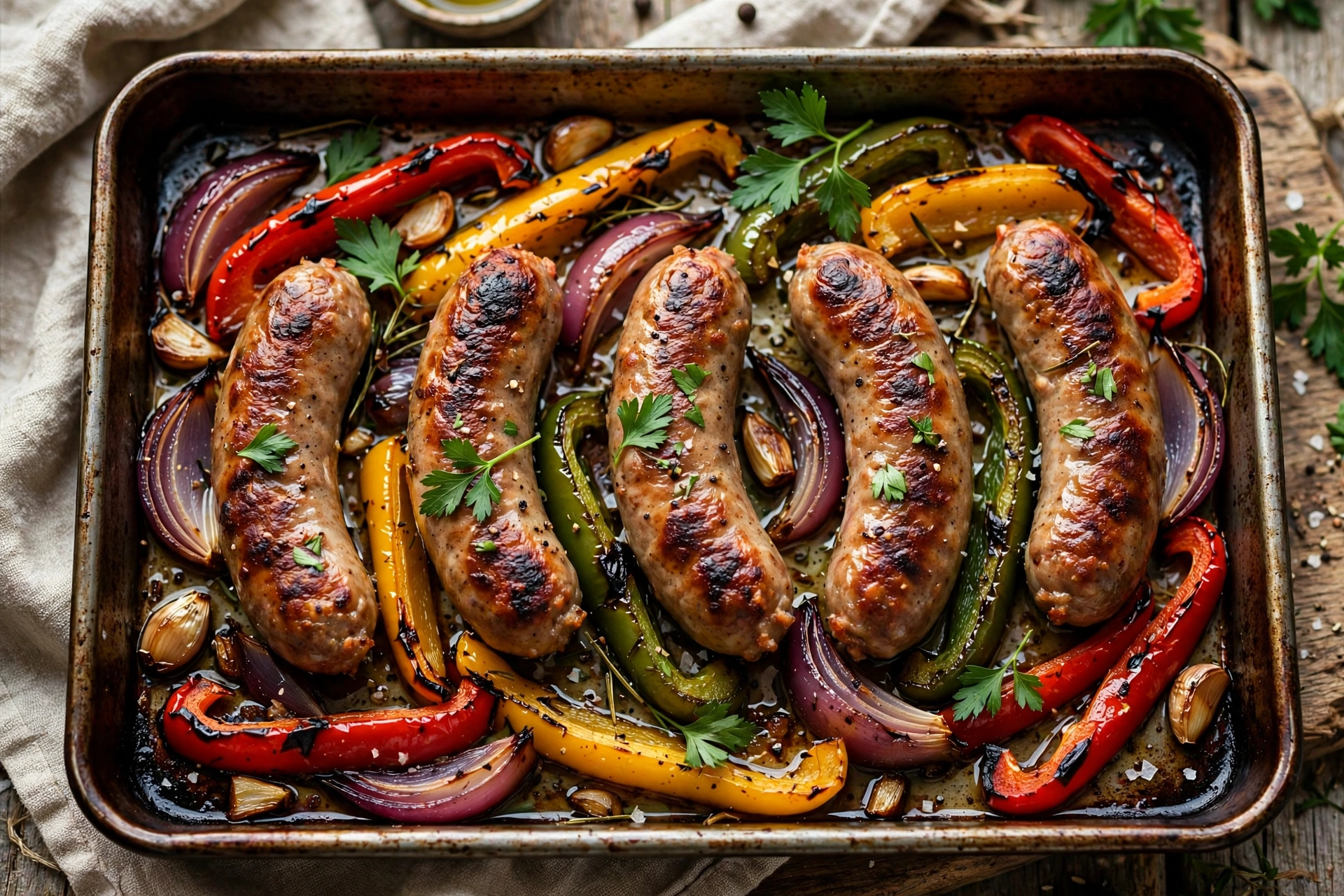
Sheet Pan Sausage and Peppers
Ingredients
Method
- Oven hot. Preheat to 425 degrees F. Parchment on a large rimmed sheet pan makes cleanup easy; a bare pan browns slightly better. Your call.
- Season the vegetables on the pan. Pepper strips and onion wedges tossed with the olive oil, garlic, oregano, fennel seeds, salt, black pepper, and red pepper flakes until glossy and evenly coated. Spread into a single layer.
- Sausage joins. Nestle the links among the vegetables, turning each once in the oil so it starts seasoned. Prick each link once or twice with a fork to let steam escape.
- First roast. Twenty minutes. The peppers soften, the sausages sit pale on top. Normal.
- Flip and finish. Turn the sausages, stir the vegetables, spread everything back into a single layer. Twelve to 15 minutes more, until the links are deeply browned and read 160 degrees F and the vegetables are tender with charred edges.
- Optional broil. One to 2 minutes at the end for extra char, watched closely.
- The finish. Vinegar drizzled over, everything tossed in the pan juices. Parsley or basil showered on top.
- Serve your way. Into hoagie rolls with provolone, run under the broiler a minute to melt, or over pasta, polenta, rice, or mashed potatoes.