

Chicken Parmesan sounds like a project. Frying, splattering, hovering over the stove in shifts. This version keeps everything people actually love about it, the crisp golden crust, the bright marinara, the blanket of bubbling mozzarella, and deletes the deep fryer from the story. The chicken bakes on a rack so the coating stays crunchy on every side, top and bottom. Table in about 45 minutes.
It’s a weeknight move that eats like a Sunday dinner. Spaghetti underneath, a big green salad alongside, and an ordinary evening suddenly feels looked after.
All the Crunch, None of the Frying
- Pounded cutlets cook evenly. Same thickness everywhere, so no dry edges sulking next to an undercooked center.
- The rack does the crisping. Hot air circulates underneath the chicken in the oven. The bottom breading bakes instead of steaming in its own juices.
- The crumbs carry the flavor. Seasoned panko plus Parmesan, and the cheese in the coating browns deeply, giving the crust a savory depth that tastes almost fried.
- Sauce goes on late, and light. A modest spoonful over each cutlet keeps the crust crunchy while the cheese melts. Drowning is the enemy.
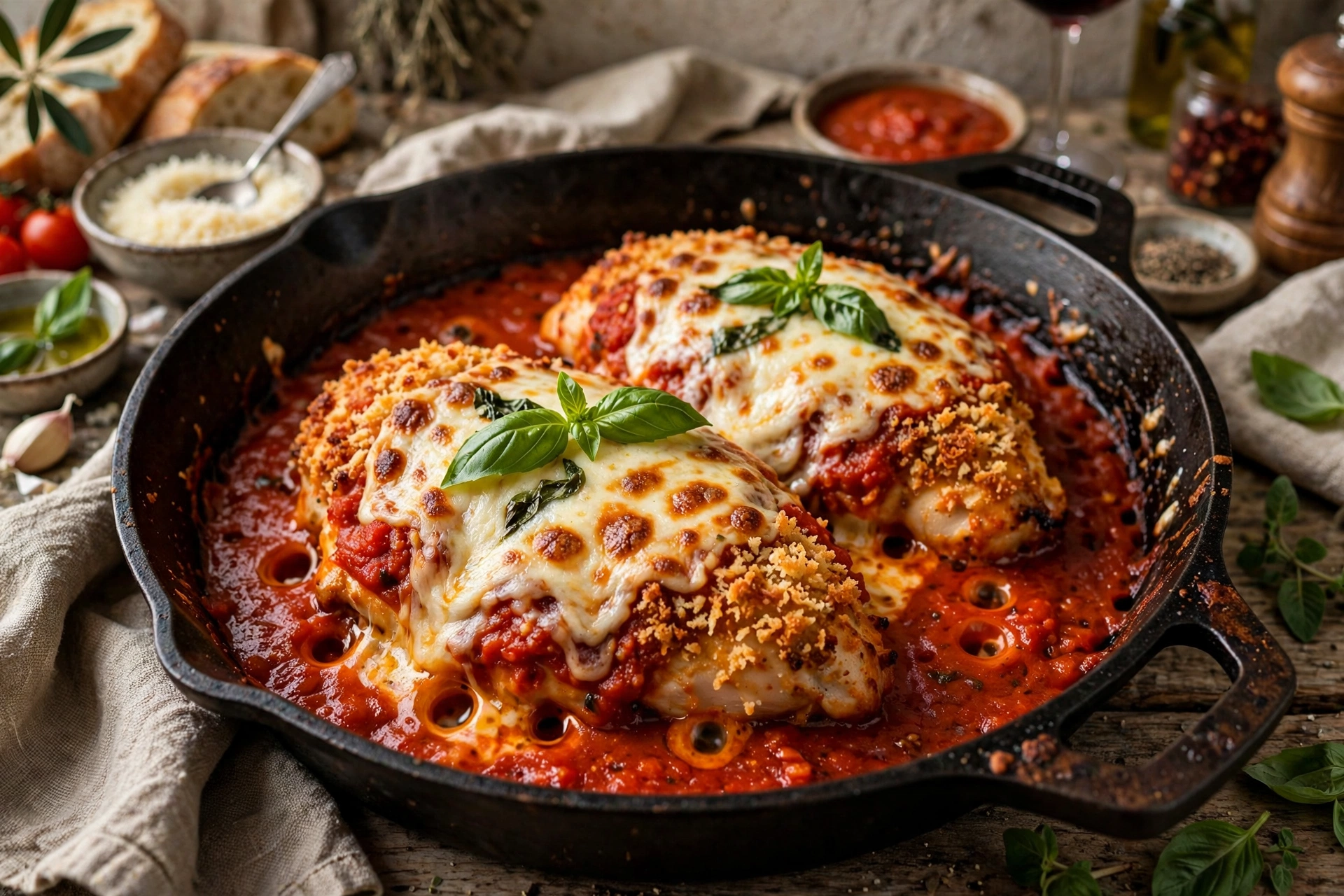
What You Need on the Counter
- 2 large boneless, skinless chicken breasts (about 1 1/2 pounds total)
- 1 teaspoon kosher salt, divided
- 1/2 teaspoon black pepper
- 1/2 cup all-purpose flour
- 2 large eggs, beaten with 1 tablespoon water
- 1 cup Italian-seasoned panko breadcrumbs
- 1/2 cup finely grated Parmesan cheese, divided
- 1 teaspoon garlic powder
- 1 teaspoon Italian seasoning
- Olive oil spray or 2 tablespoons olive oil
- 1 1/2 cups marinara sauce, store-bought or homemade
- 4 ounces fresh mozzarella, sliced, or 1 cup shredded low-moisture mozzarella
- Fresh basil leaves, for serving
- Cooked spaghetti, for serving (optional)
The Order of Operations
- Oven on, rack ready. Preheat to 425 degrees F. Wire rack on a rimmed baking sheet, rack sprayed or brushed lightly with oil.
- Cutlets. Slice each breast horizontally into two. Between sheets of plastic wrap, pound to an even 1/2-inch thickness. Season both sides with 3/4 teaspoon of the salt and the black pepper.
- Three dishes, one line. Flour in the first. Beaten eggs in the second. In the third: panko, half the Parmesan, garlic powder, Italian seasoning, and the remaining 1/4 teaspoon salt.
- Bread them properly. Flour first, shake off the excess. Egg next, let the extra drip away. Then press firmly into the panko on both sides so the coating sits in one even layer.
- Bake. Cutlets on the rack, not touching. Spray the tops generously with olive oil spray, or drizzle with oil. Fifteen minutes. Flip carefully, spray again, 5 to 7 minutes more, until deeply golden and the chicken reads 160 degrees F.
- Sauce and cheese, with restraint. About 3 tablespoons of marinara over the center of each cutlet, edges left bare. Mozzarella and the remaining Parmesan over that.
- Melt. Back in the oven 3 to 5 minutes, until the cheese bubbles with a few golden spots. Rest 5 minutes. Final temperature should read 165 degrees F.
- Serve. Basil scattered over, spaghetti underneath if you like, extra warm marinara on the side where it belongs.
Crust Insurance
- Press, then wait. A loose coating falls off. Palm pressure first, then let the breaded cutlets rest 10 minutes before baking so everything sets.
- Spray like you mean it. Dry-looking panko bakes up pale. A thorough coat of oil spray is the whole difference between beige and golden.
- Warm the marinara first. Cold sauce on hot chicken drags the temperature down and delays the cheese melt. Small saucepan, low heat, while the chicken bakes.
- Sauce has a home. It’s the pasta. Extra marinara on the cutlet undoes the crust you just built.
- Trust the thermometer, not the color. Crusts brown at different rates. 165 degrees F after the rest is the finish line that never lies.
Riffs Worth Trying
- Eggplant Parmesan. Half-inch eggplant rounds instead of chicken, salted and patted dry. Same method, same timing.
- Bring heat. Red pepper flakes in the crumbs, arrabbiata as the sauce.
- Sandwich night. Cutlets on toasted rolls, extra sauce, a handful of arugula.
- Gluten-free. Gluten-free panko and a one-to-one gluten-free flour blend swap straight in.
- Air fryer. 400 degrees F for 8 to 10 minutes, flip halfway, then sauce, cheese, and 2 more minutes.
Saving What’s Left
Fridge, up to 3 days. The crust softens in storage, that’s just physics, but you can claw most of it back: reheat on a rack in a 400 degree F oven for 10 to 12 minutes, hot and crisp at the edges. Avoid the microwave if texture matters to you. Cooked, unsauced cutlets freeze well for up to 2 months; thaw in the fridge, then sauce, cheese, and bake as written.
Questions, Answered Straight
Why does my breading fall off?
Usually the chicken was damp, or the coating was rushed. Pat the cutlets dry, shake off the excess flour, and give the breaded chicken its rest before baking so the layers bond.
Chicken thighs instead?
Yes, boneless and skinless, and they stay very juicy. Pound gently to even thickness, add a few minutes to the bake, and check for 165 degrees F.
Panko versus regular breadcrumbs, what’s the real difference?
Panko is larger and flakier, so it bakes up lighter and crunchier. Regular Italian breadcrumbs work, but expect a denser, more compact crust.
Can I get ahead of this?
Bread the cutlets up to 8 hours ahead and refrigerate them uncovered on the rack. The chill actually helps the coating set. Bake right before serving.
Sides?
Spaghetti with marinara is the classic. Garlic bread, a Caesar salad, or roasted broccoli all round the plate out properly.
Flour, Egg, Crumbs: Why the Order Is Not Negotiable
The three-step breading isn’t busywork. Each layer has a job. The flour dries the surface of the chicken and gives the egg something to grip, so the coating starts with a foundation instead of sliding off a slick, wet cutlet. The egg is glue, and it needs to coat thinly and completely; too thick a layer turns gummy and shoves the crumbs off in patches. The panko is the texture. Press it on firmly, let the breaded cutlets rest, and the layers hydrate and bond into a shell that survives flipping and baking. If a coating has ever slid off in one sad sheet, the cause is almost always one of these three: damp chicken, skipped flour, no rest. Fix those and the crust stays where you put it. Crisp corner to crisp corner.
Fifteen-Minute Marinara, If You’re Feeling Ambitious
A good jarred marinara is perfectly fine here. But a fast homemade sauce is barely more work and tastes brighter against the rich chicken. Two tablespoons of olive oil in a saucepan over medium heat. Three minced garlic cloves and a pinch of red pepper flakes, 30 seconds. In goes one 28-ounce can of crushed tomatoes, 1/2 teaspoon salt, 1/2 teaspoon sugar, and a small handful of torn basil. Simmer gently 12 to 15 minutes, stirring now and then, until slightly thickened. That’s it. The sauce keeps a week in the fridge and freezes for months, so doubling it is never a mistake. Spend about a third of the batch on the chicken and serve the rest over the pasta.
Plates That Make Sense Next to It
Spaghetti is the classic partner, tossed with warm marinara and a knob of butter so it doesn’t clump. Beyond pasta, a crisp Caesar or chopped Italian salad brings freshness and crunch, and garlic bread handles the extra sauce. On the vegetable side, roasted broccoli, sauteed spinach with garlic, or green beans with lemon all fit the Italian-American mood. Feeding a crowd? Tray of chicken, big bowl of pasta, salad, and let everyone build their own plate. The chicken holds its crispness a good twenty minutes on its rack while people gather.
Freezing and Getting Ahead
This dish rewards a little planning. The smartest make-ahead move is freezing the cutlets breaded and raw: parchment-lined tray, freeze solid, then into a freezer bag for up to two months. Bake them straight from frozen at 400 degrees F, adding about 8 minutes, and finish with sauce and cheese as written. The crust comes out remarkably crisp. Cooked and sauced leftovers keep three days in the fridge and reheat best on a rack in a hot oven. For weeknight speed, keep the components separate in the fridge: breaded raw cutlets on their tray, a jar of marinara, shredded mozzarella in a bag. Dinner then takes twenty-five minutes with almost no dishes, and the chicken tastes freshly made because it essentially is. Cooking for two? The recipe halves cleanly. The extra breading-station bowls are the only additional washing up.
A Quick Word on the Cheese
Fresh mozzarella tastes wonderful, but it weeps moisture as it melts, and that puddle lands right on your crust. Blot the slices on a paper towel for a few minutes first, or reach for low-moisture mozzarella, which melts into that classic stretchy blanket without the puddle problem. Some households mix in a little provolone for a gentle sharpness. Either way, slice or shred evenly, so the cheese melts at the same pace across every cutlet instead of leaving one bare, pale corner behind.
The Short Version
Prep time: 20 minutes
Cook time: 25 minutes
Total time: 45 minutes
Servings: 4
Cuisine: Italian-American
Course: Dinner
You may also like Air Fryer Parmesan Crusted Chicken Breast (40g Protein), Air Fryer Chicken Fajitas — Juicy in 15 Minutes and Chicken Caesar Pasta Salad (Creamy & Fresh).
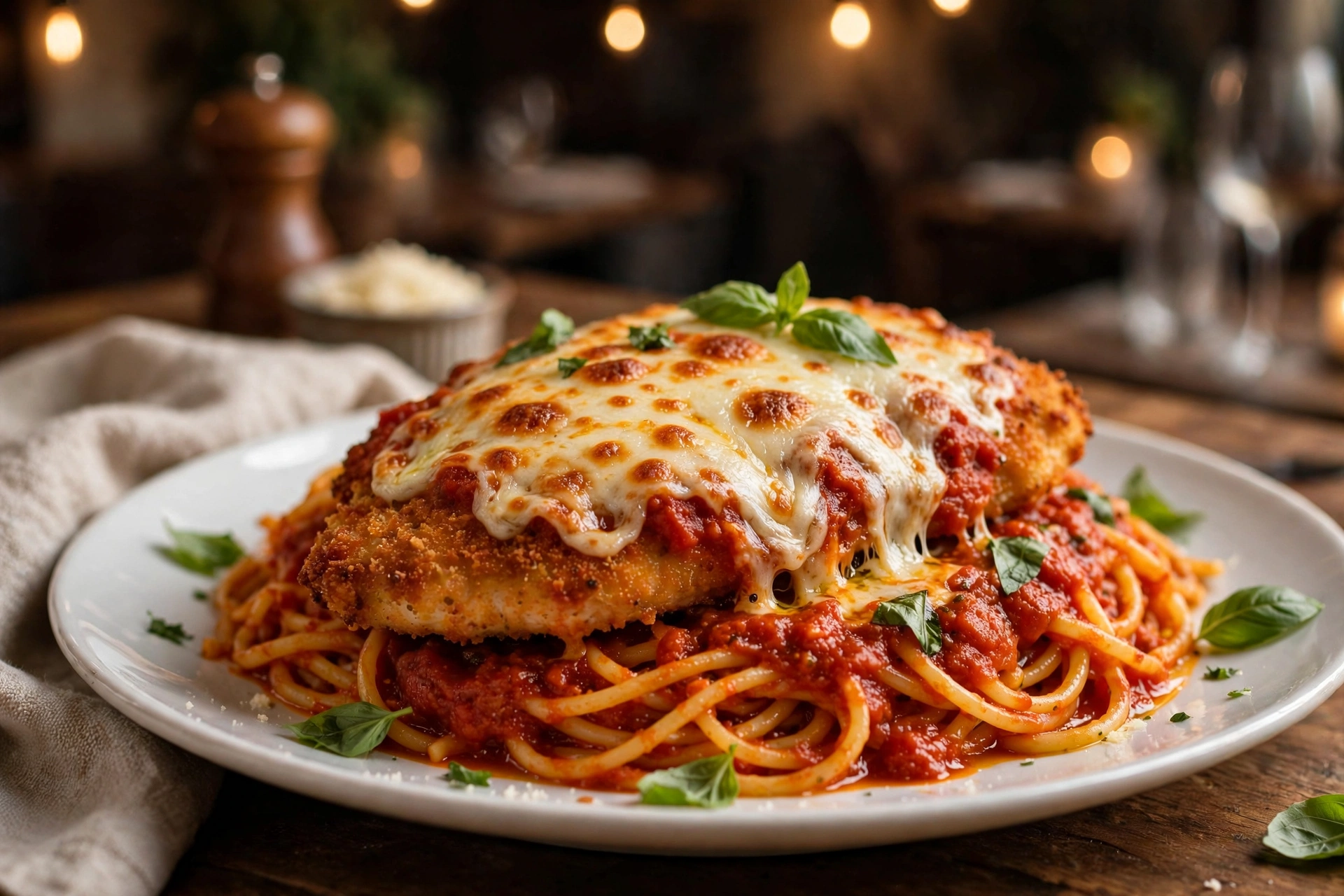
Baked Chicken Parmesan
Ingredients
Method
- Oven on, rack ready. Preheat to 425 degrees F. Wire rack on a rimmed baking sheet, rack sprayed or brushed lightly with oil.
- Cutlets. Slice each breast horizontally into two. Between sheets of plastic wrap, pound to an even 1/2-inch thickness. Season both sides with 3/4 teaspoon of the salt and the black pepper.
- Three dishes, one line. Flour in the first. Beaten eggs in the second. In the third: panko, half the Parmesan, garlic powder, Italian seasoning, and the remaining 1/4 teaspoon salt.
- Bread them properly. Flour first, shake off the excess. Egg next, let the extra drip away. Then press firmly into the panko on both sides so the coating sits in one even layer.
- Bake. Cutlets on the rack, not touching. Spray the tops generously with olive oil spray, or drizzle with oil. Fifteen minutes. Flip carefully, spray again, 5 to 7 minutes more, until deeply golden and the chicken reads 160 degrees F.
- Sauce and cheese, with restraint. About 3 tablespoons of marinara over the center of each cutlet, edges left bare. Mozzarella and the remaining Parmesan over that.
- Melt. Back in the oven 3 to 5 minutes, until the cheese bubbles with a few golden spots. Rest 5 minutes. Final temperature should read 165 degrees F.
- Serve. Basil scattered over, spaghetti underneath if you like, extra warm marinara on the side where it belongs.

1 Comment