

Some weeknight dinners just hit different. Honey garlic salmon is one of them: salmon fillets seared until the skin turns shatteringly crisp, then lacquered in a sticky glaze of honey, garlic, soy, and butter. Sweet, savory, garlicky — ready in 15 minutes.
The high-heat sear keeps the inside silky while the glaze reduces into something you’d eat with a spoon. Serve over rice with extra sauce — dinner is done.
Why This Recipe Works
- Dry skin + ripping hot pan = crispy skin. Patting dry is the single most important step.
- Sear first, glaze second. Honey added too early burns; glazing at the end gives caramelization without bitterness.
- Butter finishes the sauce. A knob of butter turns the glaze glossy and rich.
- 15 minutes, one pan. Minimal cleanup, maximum flavor.
Ingredients You’ll Need
- 4 salmon fillets (6 oz each), skin-on preferred
- Kosher salt and black pepper
- 1 tablespoon olive oil
- 4 garlic cloves, minced
- ⅓ cup honey
- ¼ cup low-sodium soy sauce
- 1 tablespoon rice vinegar
- 2 tablespoons unsalted butter
- 1 teaspoon grated fresh ginger (optional)
- Red pepper flakes, to taste (optional)
- Sliced scallions and sesame seeds, for garnish
- Lemon wedges, for serving
Choosing Your Salmon
Even thickness (1–1½ inches) cooks uniformly. Skin-on is recommended. Farmed Atlantic is fattier and forgiving; wild-caught is leaner — pull 30 seconds earlier.
How to Make Honey Garlic Salmon
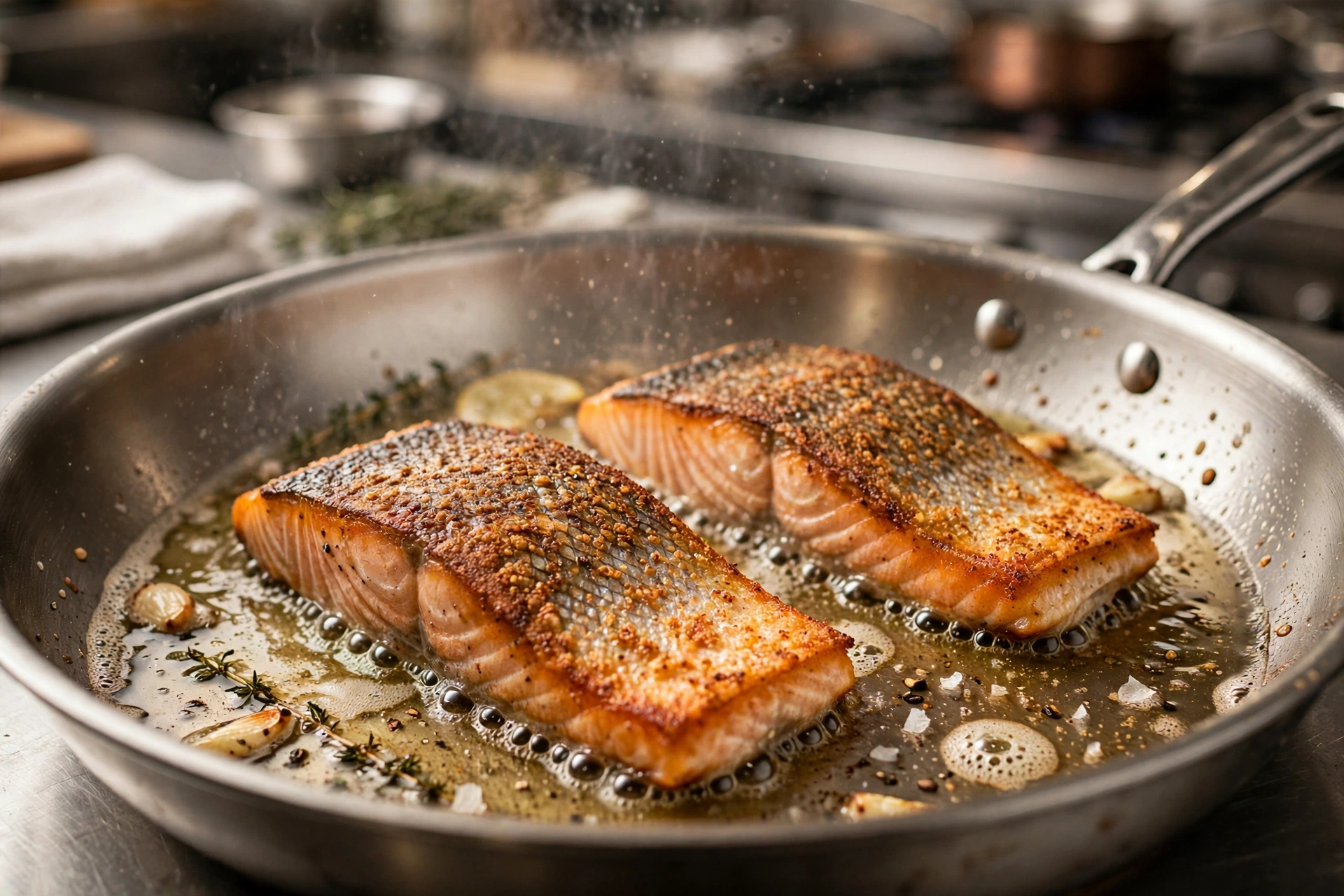
1. Prep the fillets. Pat completely dry — top, bottom, sides. Season generously with salt and pepper.
2. Mix the glaze. Whisk honey, soy sauce, vinegar, ginger, and red pepper flakes. Set near the stove.
3. Sear skin-side down. Heat oil in a large skillet (stainless or cast iron) over medium-high until shimmering. Lay fillets skin-side down, press 10 seconds. Cook undisturbed 5–6 minutes.
4. Flip and glaze. Flip; add garlic, stir 30 seconds. Pour in honey-soy mixture — it bubbles vigorously. Spoon glaze over fillets 1–2 minutes as it thickens.
5. Finish with butter. Swirl in butter until glossy. Done at 125–130°F internal.
6. Serve immediately. Spoon over glaze; shower with scallions and sesame. Lemon wedges on the side.
The Honey Garlic Glaze (Why It Works)
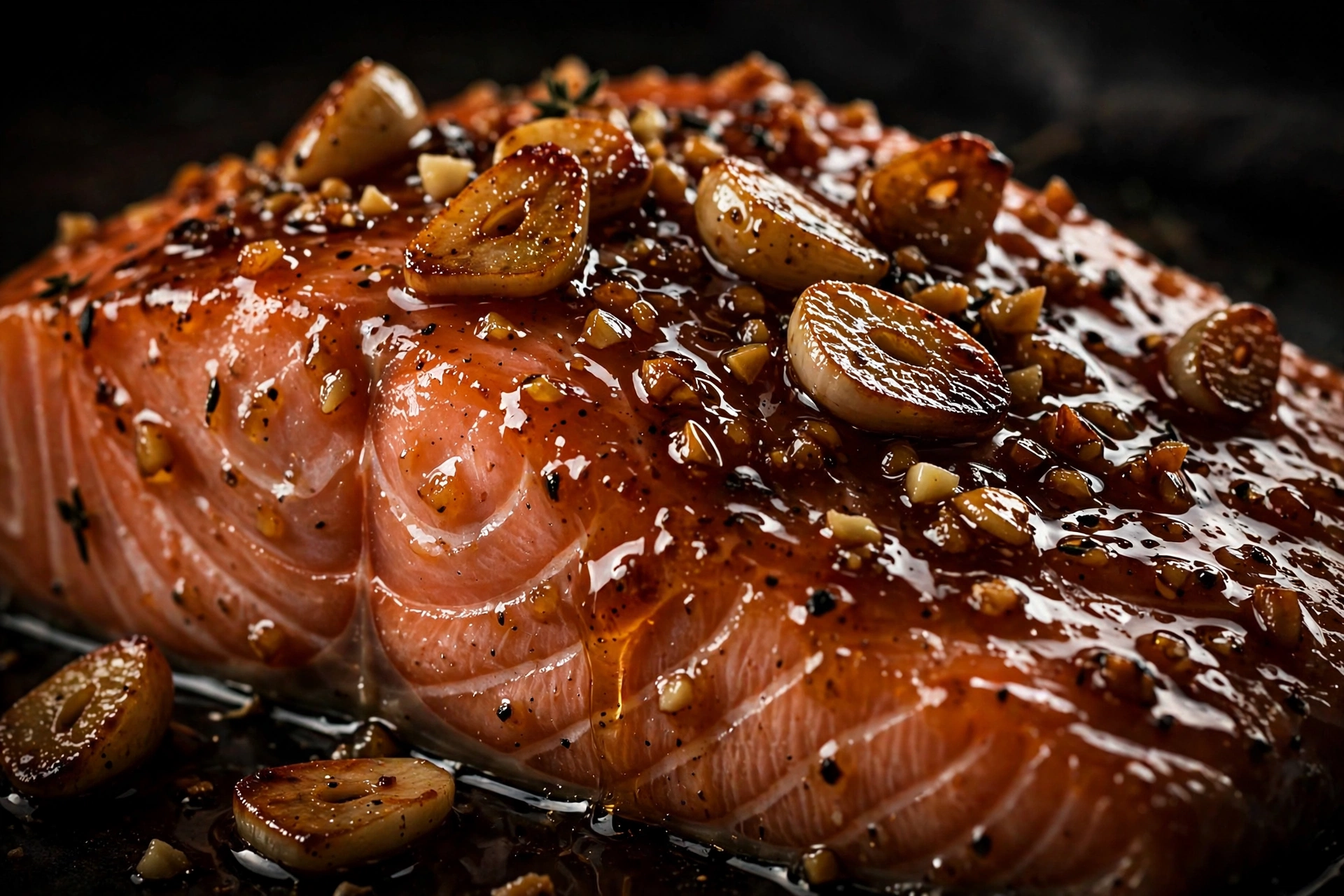
Honey = sweetness and caramelization; soy = salt and umami; vinegar cuts richness; garlic = punch. Butter emulsifies it into a clinging sauce.
Pro Tips for Perfect Salmon
- Pat dry, then pat dry again. 80% of crispy skin.
- Don’t move the fish. Let the crust build.
- Watch the honey. Medium-high, keep it moving.
- Use a thermometer. 125°F silky medium, 130°F medium.
- Skin stuck? Pan wasn’t hot enough or skin wasn’t dry.
What to Serve With It
Steamed jasmine rice, roasted broccoli or asparagus, cucumber salad, or garlic butter noodles. Low-carb: cauliflower rice + spinach.
Variations to Try
- Spicy honey garlic. Double red pepper flakes + sriracha.
- Miso honey salmon. Swap a tablespoon of soy for white miso.
- Baked version. Sear skin, then 400°F oven 6–8 min; glaze last 2 min.
- Air fryer. 400°F 7–9 min, brush glaze halfway.
Storage & Reheating
Refrigerate up to 3 days. Reheat gently — 275°F oven 10 min. Cold leftovers are great flaked over salads.
Frequently Asked Questions
Should I eat the salmon skin?
If crisp, absolutely — like a fish chip. Peels off easily if you prefer.
Can I use skinless fillets?
Yes — 4 minutes per side, flip carefully.
My glaze burned — what happened?
Heat too high or cooked too long. Medium-high, keep moving.
Can I use frozen salmon?
Thaw completely first, then pat extra dry.
What if I don’t have rice vinegar?
Apple cider vinegar or lemon juice works — just need acid.
What’s Doing What, and What to Swap
A short ingredient list means every item pulls real weight. Worth knowing what each one is doing, and what steps in when the pantry doesn’t cooperate.
Salmon. Center-cut fillets win because they’re an even thickness from end to end; the thin tail doesn’t overcook while the thick end finishes. Fillets that taper a lot? Tuck the thin tail under itself for the first few minutes of searing so it cooks at the same rate. Skin-on is strongly recommended: it shields the flesh from direct heat, crisps into something genuinely delicious, and makes flipping far less nerve-wracking.
Honey. A mild clover or wildflower honey keeps the garlic and soy in the foreground. Orange blossom honey adds a gentle floral note that works beautifully here. Avoid dark, bitter honeys like buckwheat, which can dominate the glaze. Crystallized jar? Ten minutes in a bowl of hot water and it pours again.
Soy sauce. Low-sodium is specified because the glaze reduces and concentrates; regular soy can push it over into too salty. Gluten-free route, tamari swaps one-to-one. Coconut aminos work too and run naturally sweeter, so trim the honey by about a teaspoon if you use them.
Garlic. Fresh is best here, since it goes in near the end and stays punchy. In a pinch, one quarter teaspoon of garlic powder whisked into the glaze replaces each clove, mellower and more rounded, but it works.
Fat for searing. Olive oil is fine. Avocado oil or another neutral high-heat oil buys you more headroom before smoking. Save the butter for the finish, where it belongs; butter at the start would brown and burn during the long skin-side sear.
Ginger. Fresh grated ginger adds warmth and a faint citrusy bite. Ground ginger works at one quarter of the fresh amount. Optional either way; leave it out if you want a cleaner honey-garlic profile.
Knowing When It’s Done, Without Guessing
More salmon is ruined by overcooking than by any other mistake. Learn the cues and stop watching the clock so nervously.
Temperature first. An instant-read thermometer in the thickest part tells the truth. Pull at 120 to 125 degrees F for silky medium-rare, 130 degrees F for medium with a just-set center, and know the USDA recommendation of 145 degrees F produces a firm, fully opaque fillet. Carryover cooking is real: the temperature climbs a few degrees as the fish rests, so come off the heat slightly before your target.
Watch the color line. As salmon cooks, the translucent deep-orange flesh turns pale and opaque from the bottom up. You can literally see the line climb the side of the fillet. When opaque has risen about three quarters of the way and the top still looks slightly glossy and translucent, that’s the window. Moist center, right there.
The flake test. Press gently on top with a fork or your fingertip. Done salmon yields and starts separating along its natural flakes with very little pressure. Resists and feels bouncy? Another minute. Falls apart at a touch? Past done, though the glaze will still make it tasty.
Mind the white stuff. That white protein seeping out is albumin. A little is normal. Pools of it mean the fish was pushed hard and is squeezing out moisture. Lower heat and an earlier pull keep it to a minimum.
Mistakes That Ruin This Dish
- Skipping the paper towels. Surface moisture is the enemy of crisp skin. Wet skin steams instead of searing, sticks to the pan, tears when you flip. Pat dry, then pat again right before the pan.
- Cooking straight from the fridge. Ice-cold fillets in a hot pan cook unevenly, overcooked edges around a raw center. Ten to 15 minutes on the counter while you mix the glaze and prep garnishes.
- A pan that isn’t hot enough. Oil not shimmering when the fish goes in means the skin bonds to the metal instead of crisping. In doubt, give the pan another 30 seconds.
- Crowding. Four fillets crammed edge to edge drop the pan temperature and trap steam, softening the skin you worked for. Large skillet, or two batches.
- Glaze in too early. Honey scorches fast. In at the start, it blackens and turns bitter long before the fish is done. Final two minutes only.
- Flipping more than once. Every extra flip risks breaking the fillet and tearing the skin. One confident flip is all this recipe needs.
- Forcing the release. Salmon lets go of the pan on its own once the crust has formed. Sticking when you nudge it? Wait another 30 seconds instead of forcing it.
Cooking for Two, Cooking for Eight
Two servings: halve everything, glaze included. Use the same size pan you would for four; the extra surface area helps a small amount of glaze reduce quickly instead of spreading thin.
Eight servings: two batches, never one crowded pan doubled up. Keep the first batch warm on a rack in a 200 degree F oven, uncovered so the skin stays crisp, and make a fresh half-batch of glaze for the second round. Doubling the glaze in a single pan is a common trap: the extra liquid steams the fish and takes so long to reduce that the salmon overcooks before the sauce ever thickens.
Getting Ahead, Staying Ready
The glaze is the best make-ahead candidate you have. Whisk it together up to five days out, sealed jar in the fridge; the garlic flavor mellows and melds nicely over a day or two. Stir before using.
Do not marinate the raw salmon in it, though. The soy sauce’s salt firms up the surface of the fish and the honey makes a mess of the sear, so raw fillets get seasoned simply, salt and pepper, and glazed only at the end, as written. Raw fillets keep well for a day in the fridge, loosely covered on a paper towel lined plate, which also helps the skin dry out.
Cooked honey garlic salmon is a meal-prep workhorse. Flake it cold over grain bowls, green salads, or noodle salads for lunches within three days. Day two, it makes an excellent fried rice: chop the leftover fillets, fold them through hot rice with frozen peas and a beaten egg, finish with a drizzle of any remaining glaze.
Off the Rice Plate: Other Lives for This Salmon
Salmon, rice, green vegetable is the classic plate, but the glaze adapts. Build rice bowls with warm jasmine rice, the glazed salmon, quick-pickled cucumber, edamame, and a sprinkle of sesame, and dinner feels like a takeout upgrade. Flake the salmon into warm corn tortillas with shredded cabbage and a squeeze of lime, and the sweet glaze stands in for a sauce in fast fish tacos. Or set a whole fillet over a chilled soba noodle salad with scallions and cucumbers; the glaze doubles as the dressing once it loosens with a spoonful of noodle cooking water. Appetizer mode: cut a cooked fillet into bite-size pieces, set each on a butter lettuce leaf with a few scallions, and let guests eat them by hand.
Frozen Salmon Deserves More Respect
Good frozen salmon beats mediocre fresh salmon almost every time. Most fillets labeled fresh at the counter were frozen for transport and thawed in the store, while quality frozen fillets get sealed at peak condition shortly after catch. Look for vacuum-sealed portions with no thick frost or ice glaze inside the package; those are signs of freezer burn or thaw-and-refreeze handling. Thaw overnight in the fridge on a towel-lined plate, never on the counter, and use within a day of thawing. Previously frozen fish releases more moisture, so dry the surface thoroughly before seasoning. That single step protects the crisp skin this whole recipe is built around.
If this one is on your list, these go well with it: Creamy Garlic Butter Pasta (20-Minute Recipe), Creamy Garlic Butter Shrimp Pasta — 30-Minute Dinner and Slow Cooker Honey Garlic Chicken Thighs — Sticky & Easy.
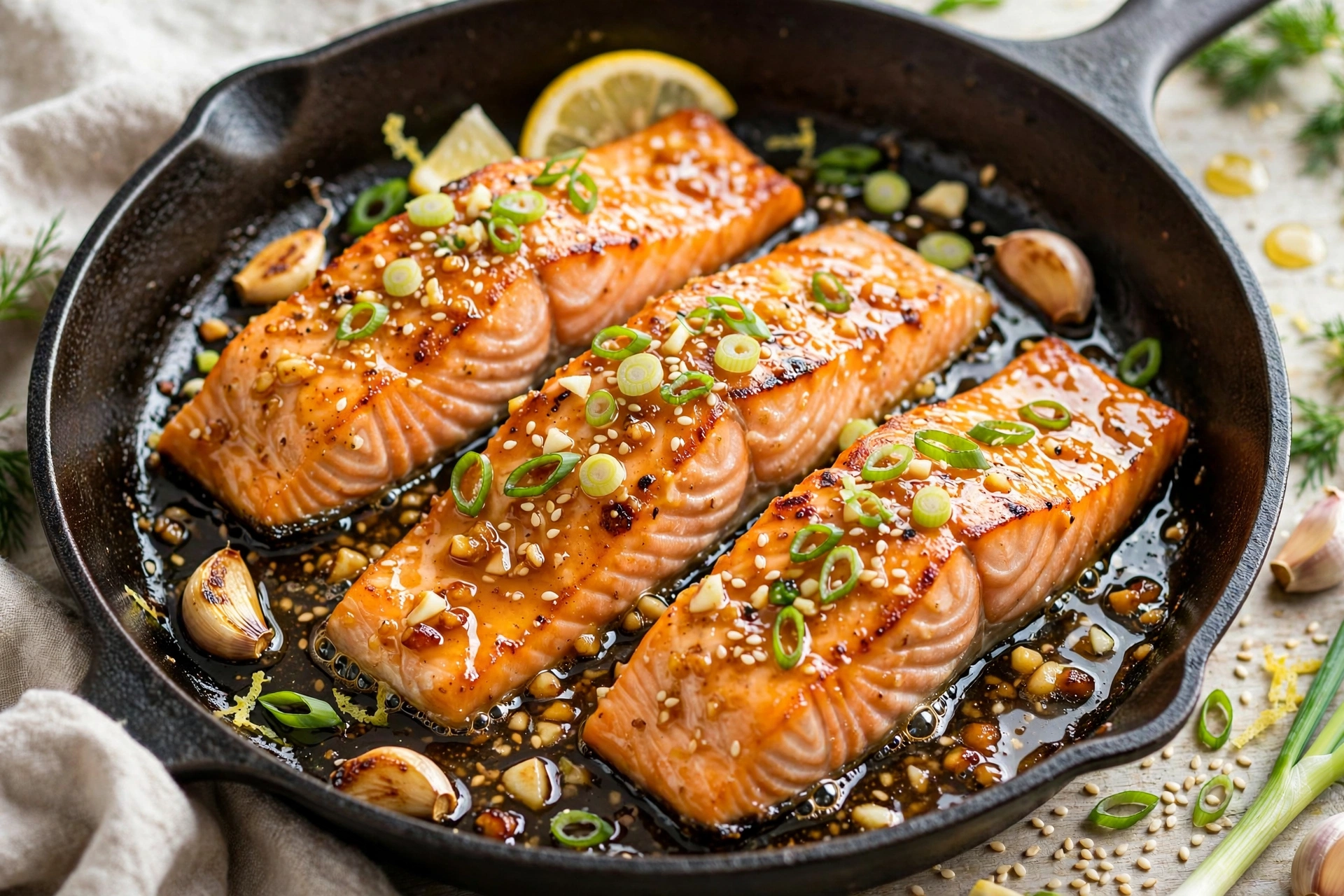
Honey Garlic Salmon
Ingredients
Method
- Prep the fillets. Pat the salmon completely dry — top, bottom, sides. Season generously with salt and pepper.
- Mix the glaze. Whisk together the honey, soy sauce, vinegar, ginger, and red pepper flakes. Set it near the stove.
- Sear skin-side down. Heat the oil in a large skillet (stainless or cast iron) over medium-high until shimmering. Lay the fillets skin-side down and press them for 10 seconds. Cook undisturbed for 5–6 minutes.
- Flip and glaze. Flip the fillets, add the garlic, and stir for 30 seconds. Pour in the honey-soy mixture — it will bubble vigorously. Spoon the glaze over the fillets for 1–2 minutes as it thickens.
- Finish with butter. Swirl in the butter until glossy. The salmon is done at 125–130°F internal temperature.
- Serve immediately. Spoon the glaze over the top, then shower with scallions and sesame seeds. Lemon wedges on the side.


1 Comment